How to choose a CV template
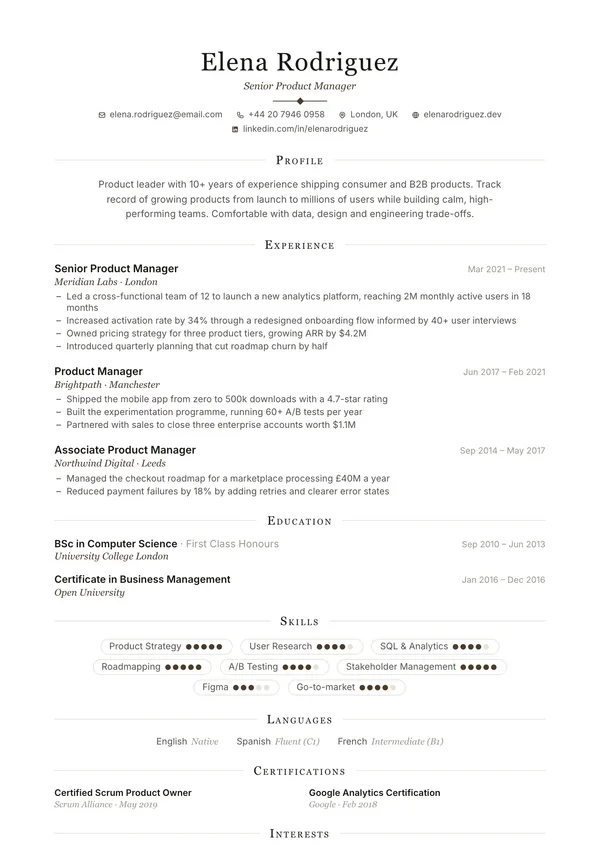
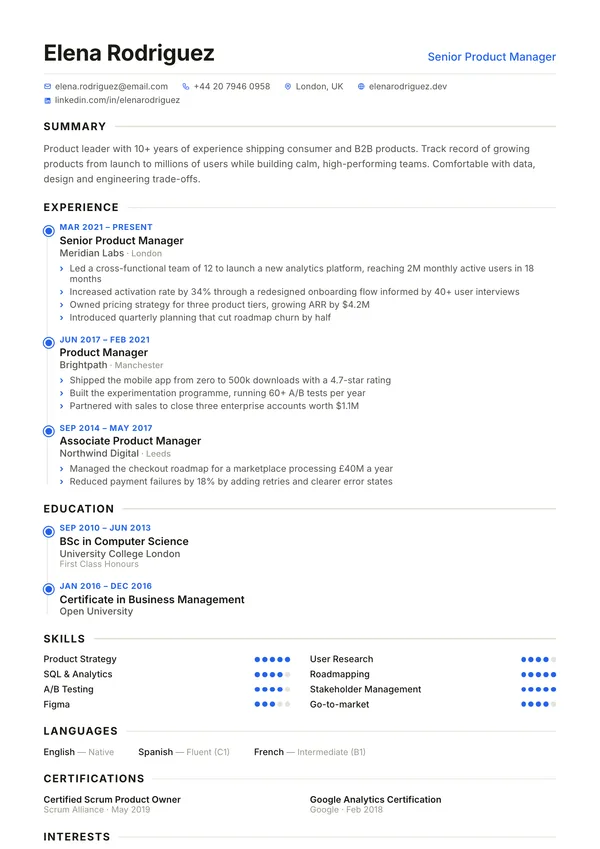
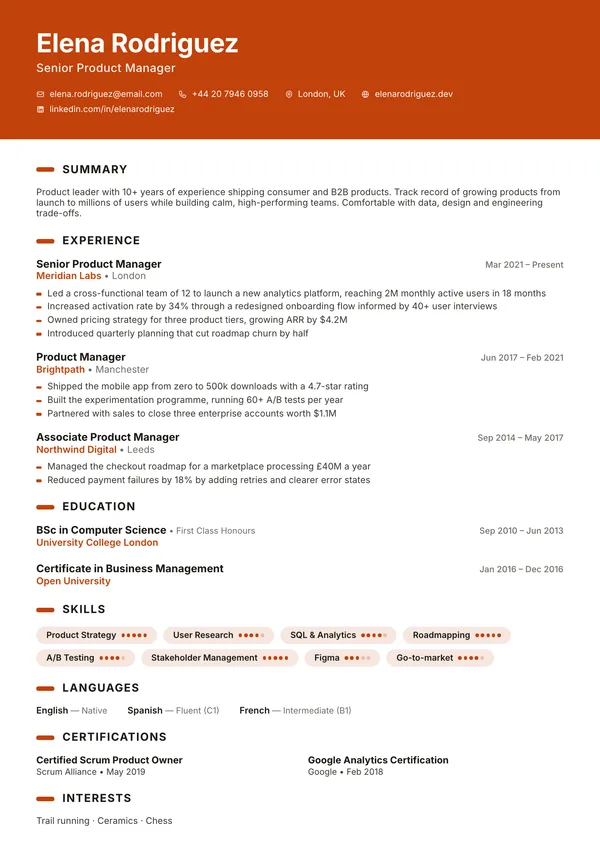
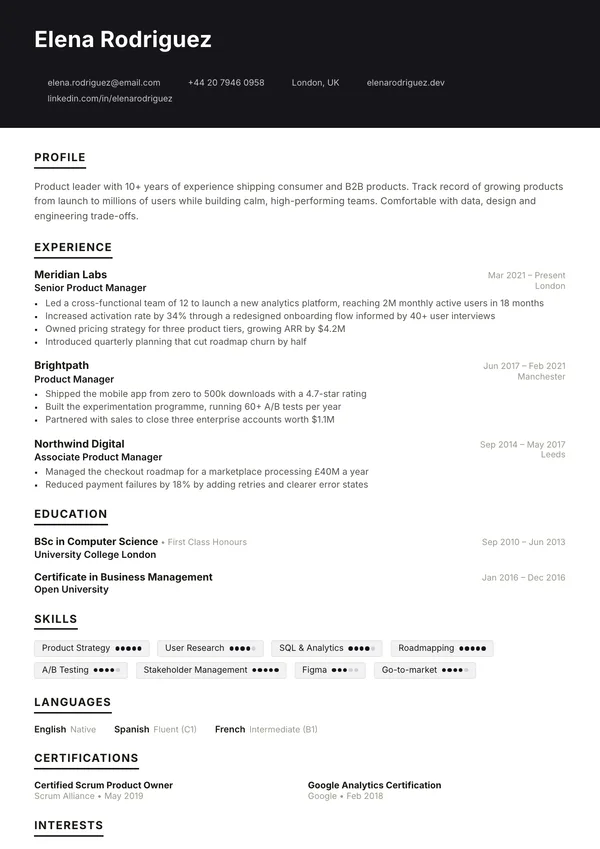
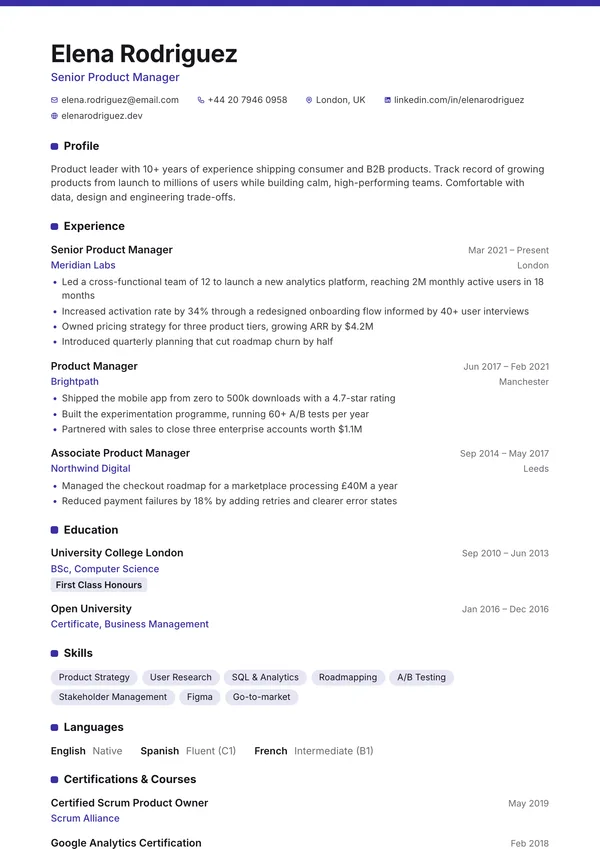
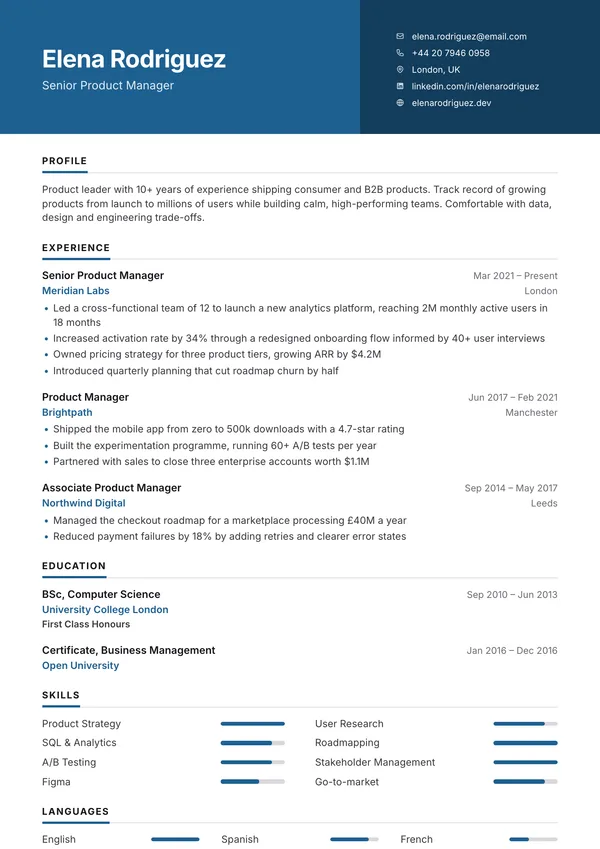
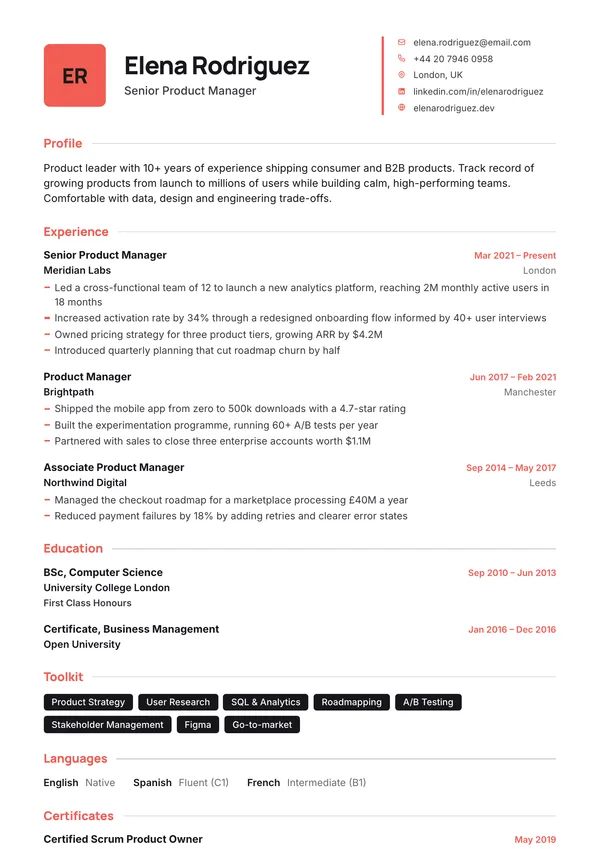
The template should make your strongest material easy to find, not decorate it. Three questions narrow
71 designs down to two or three:
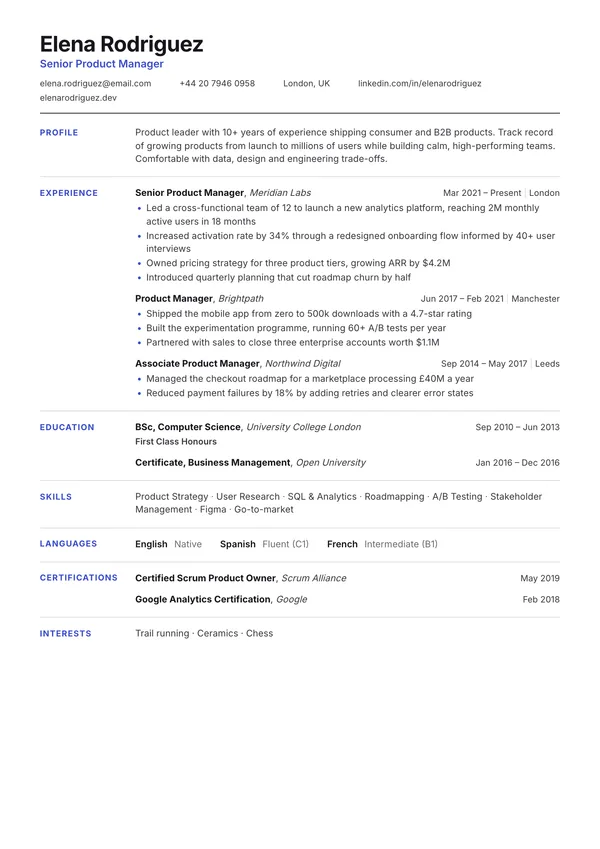
1. Will a person or a portal read it first?
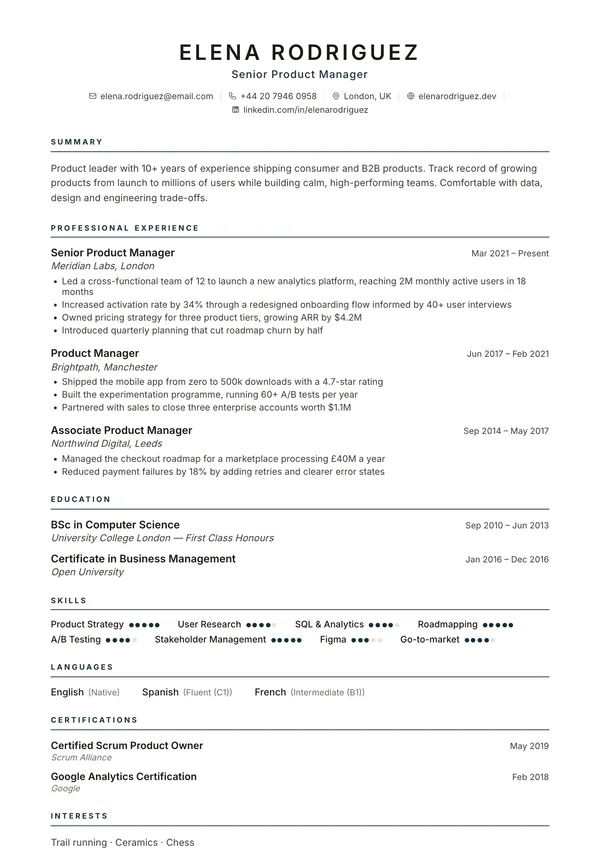
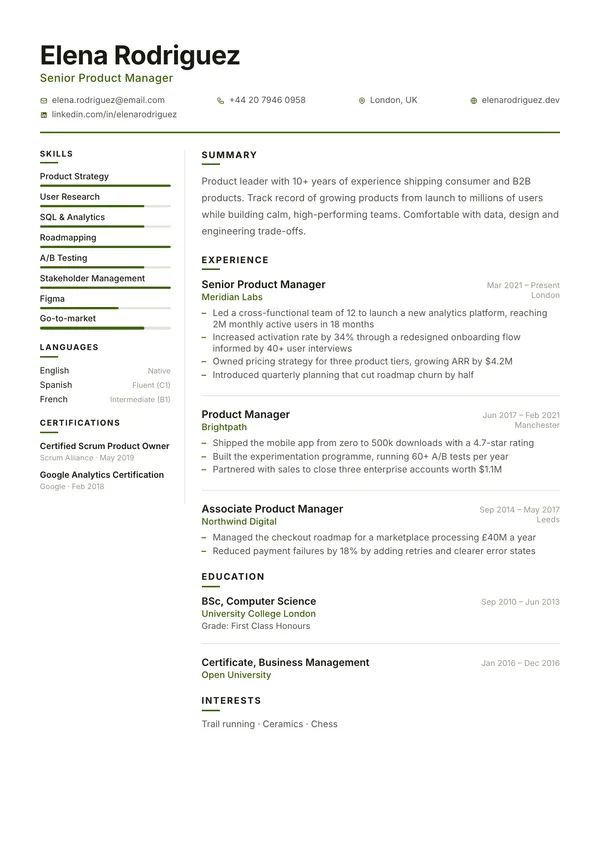
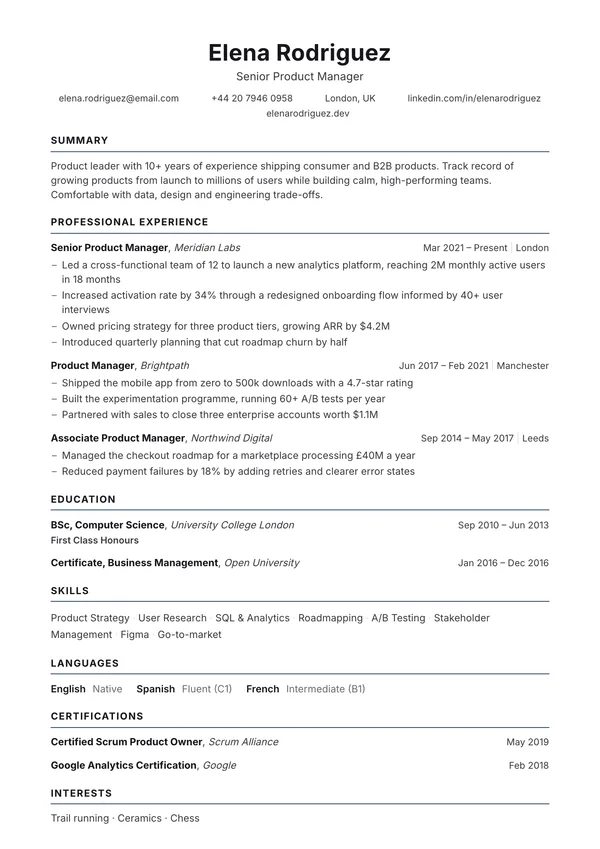
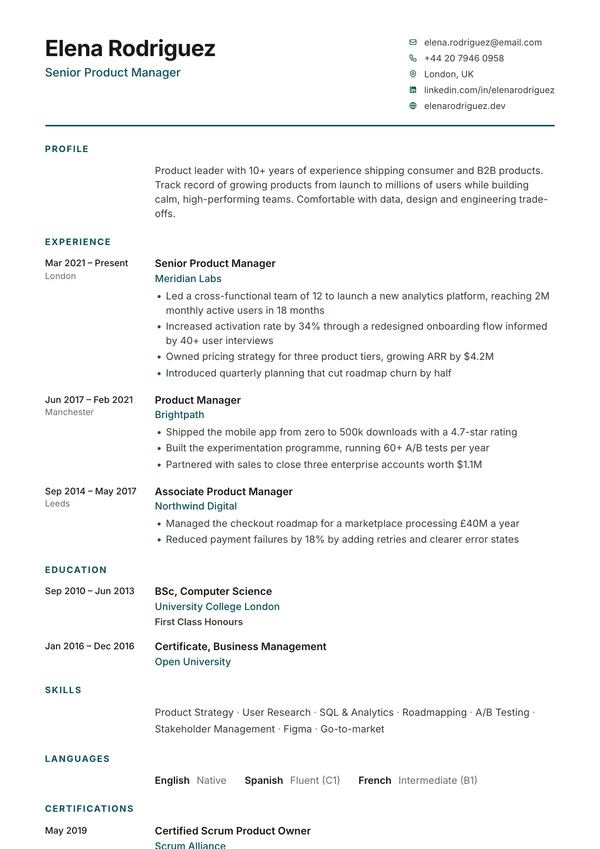
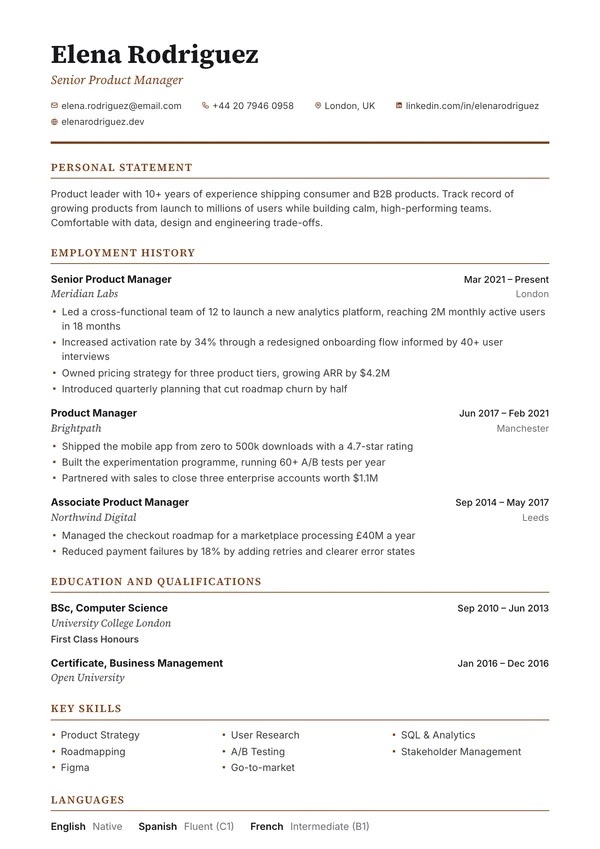
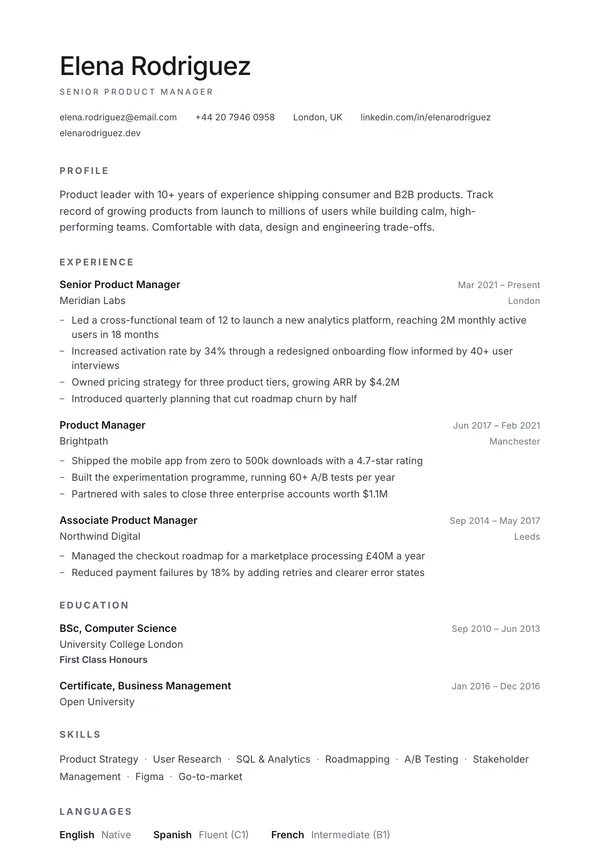
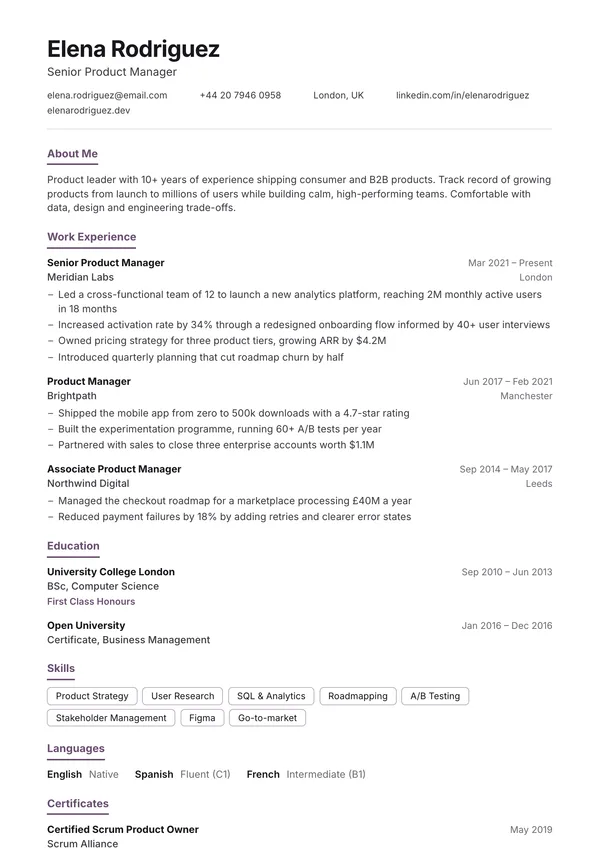
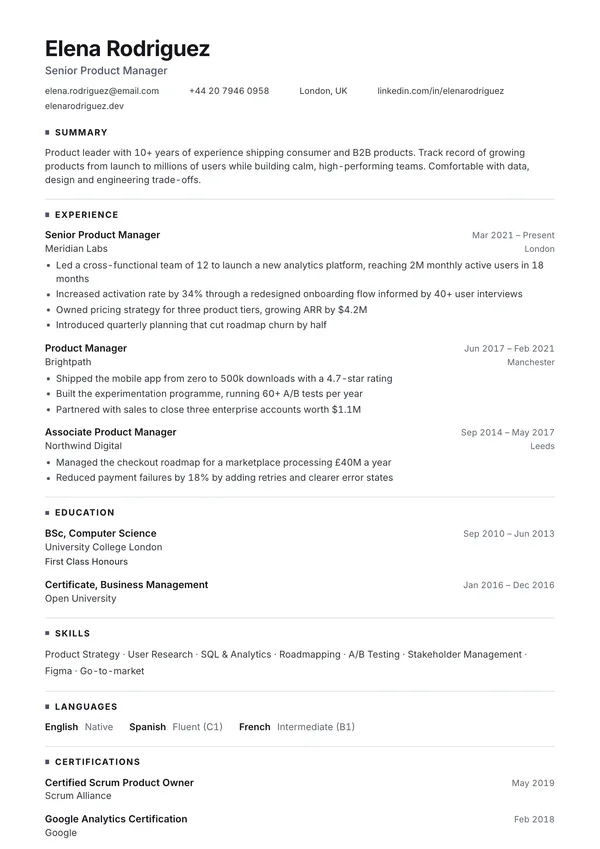
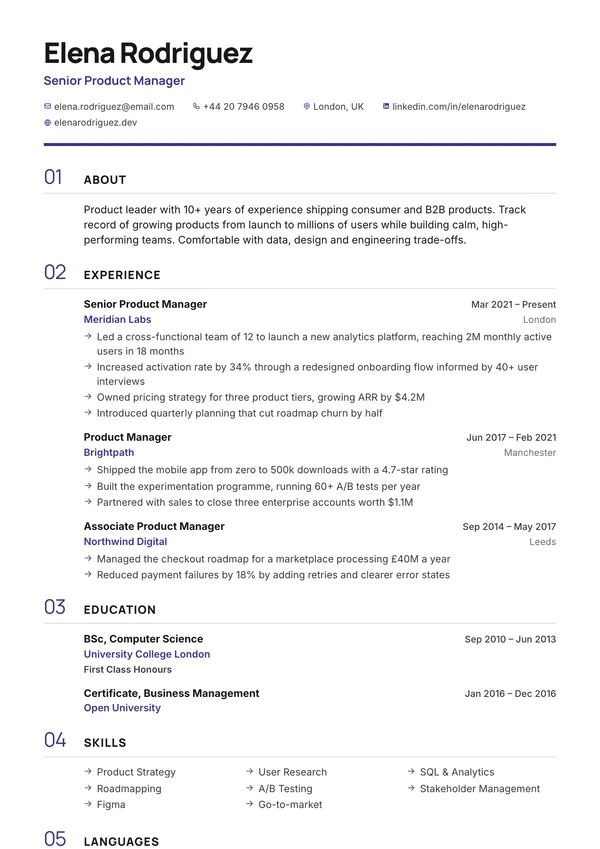
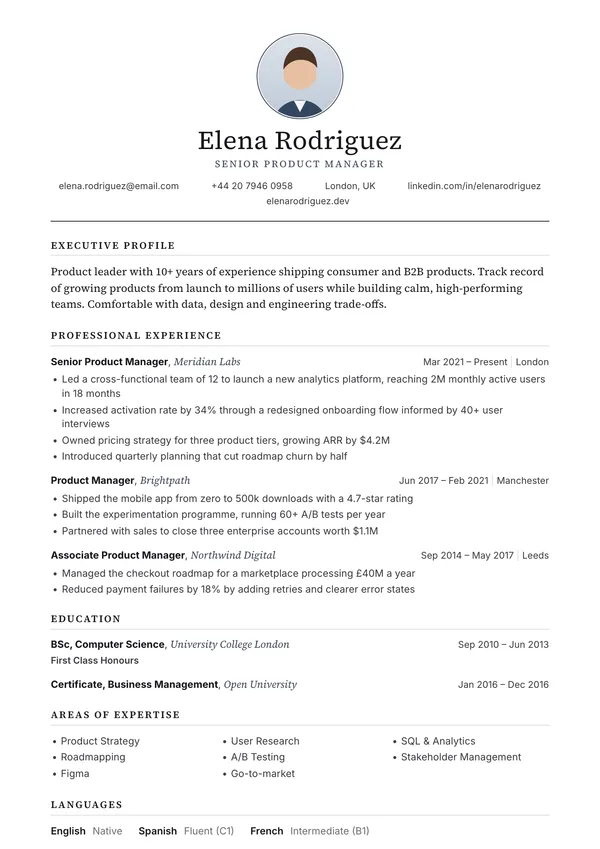
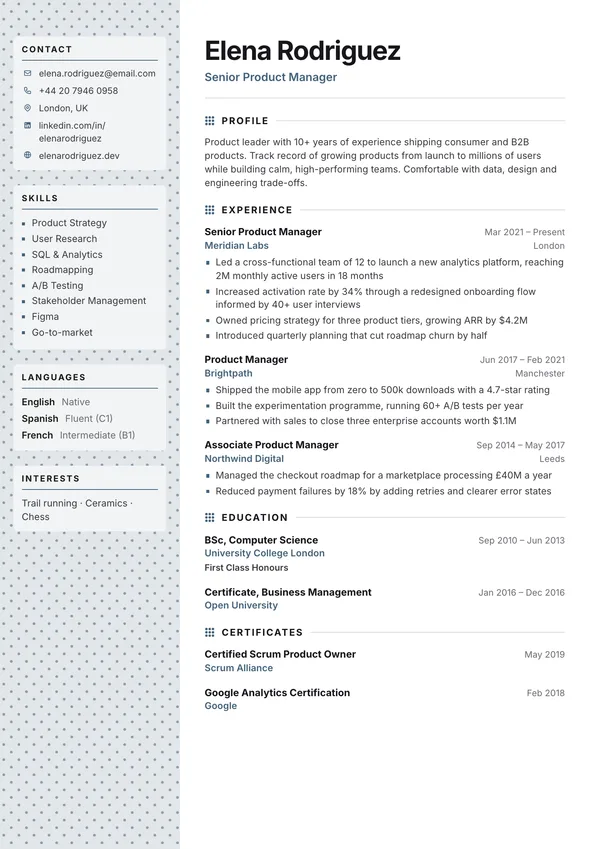
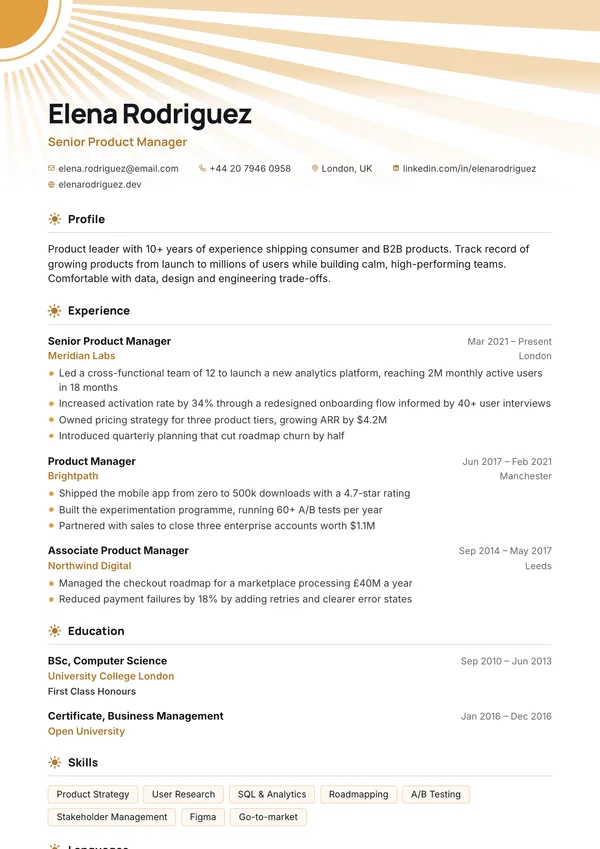
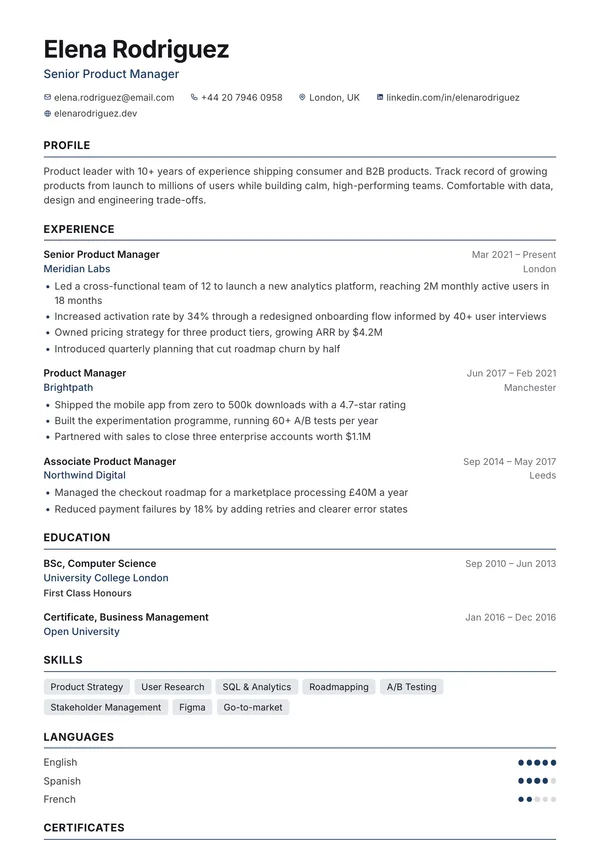
Large employers and recruitment agencies run CVs through applicant tracking software. For those, a
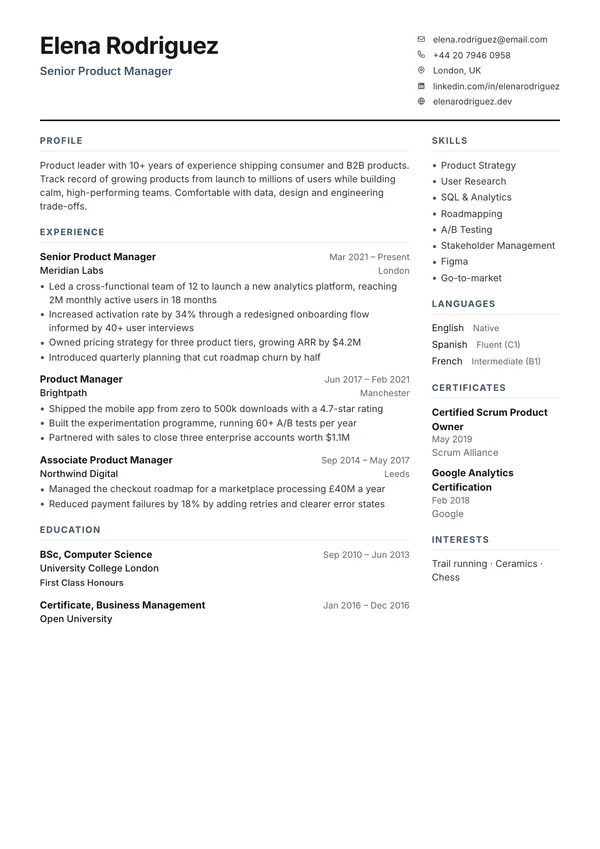
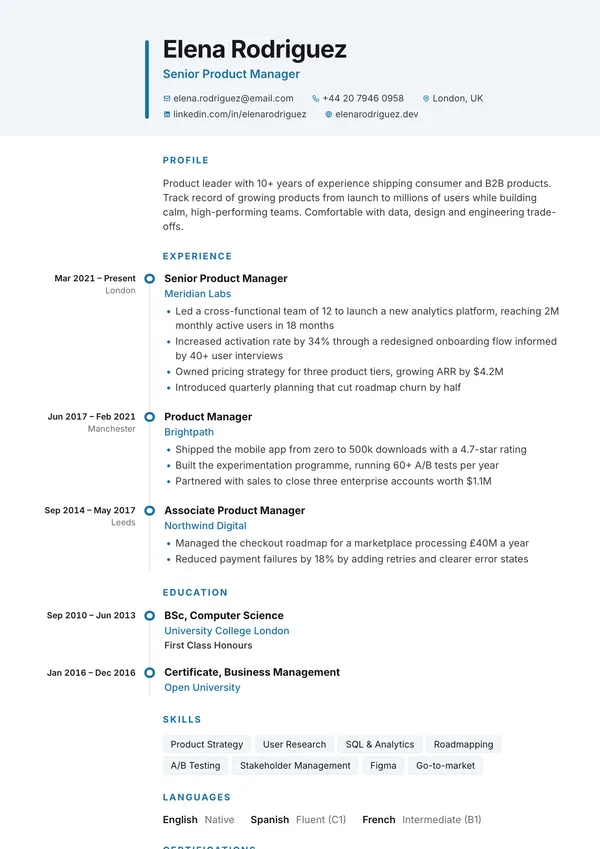
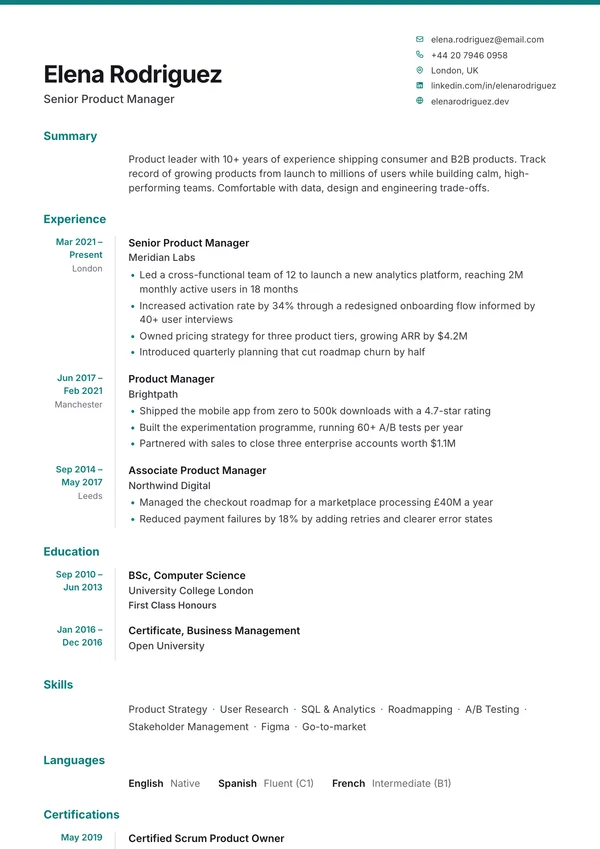
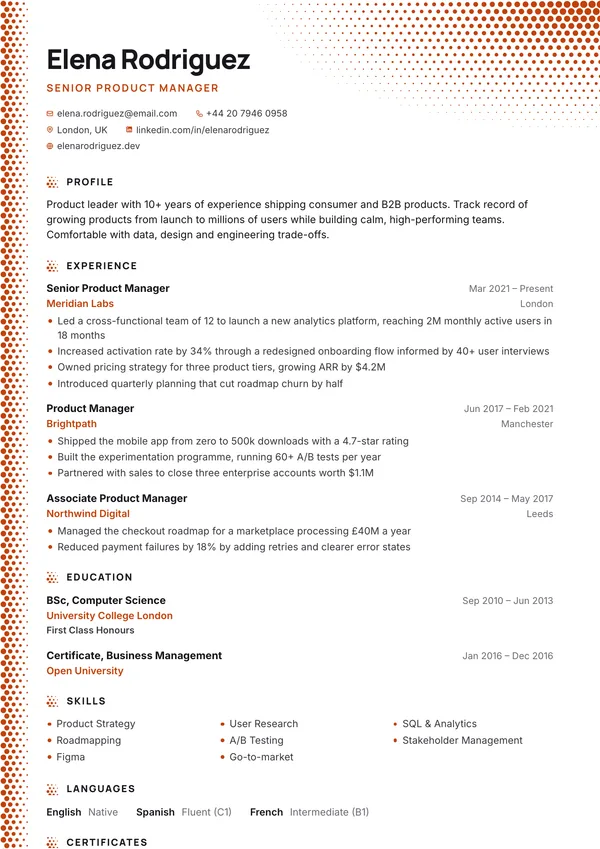
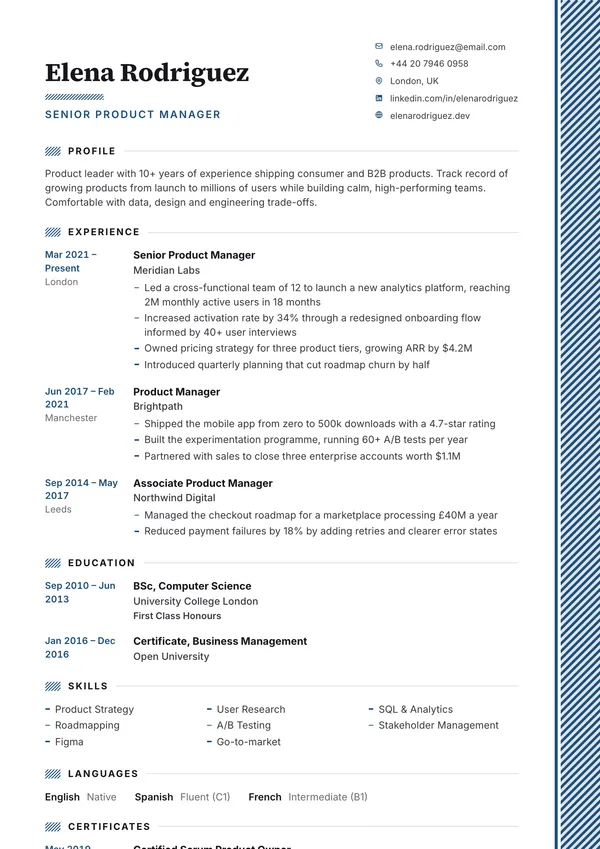
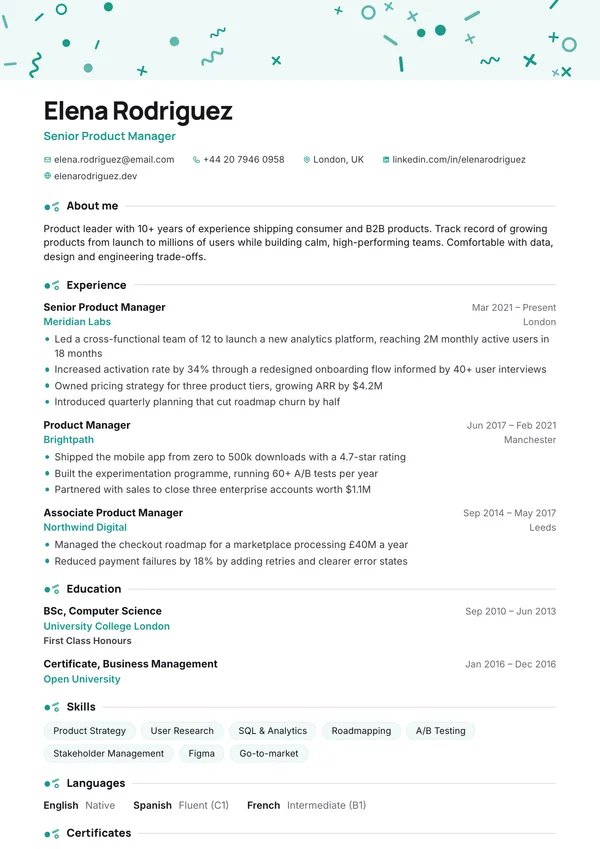
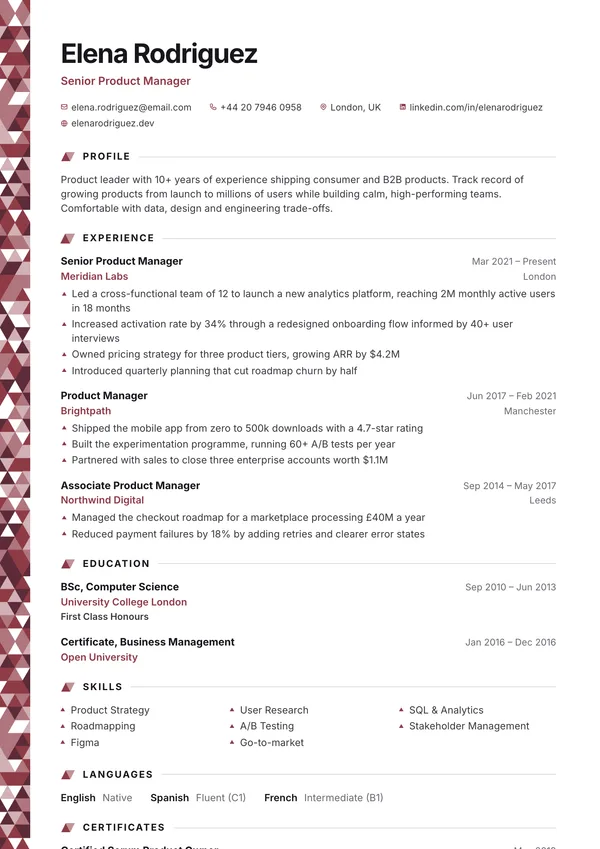
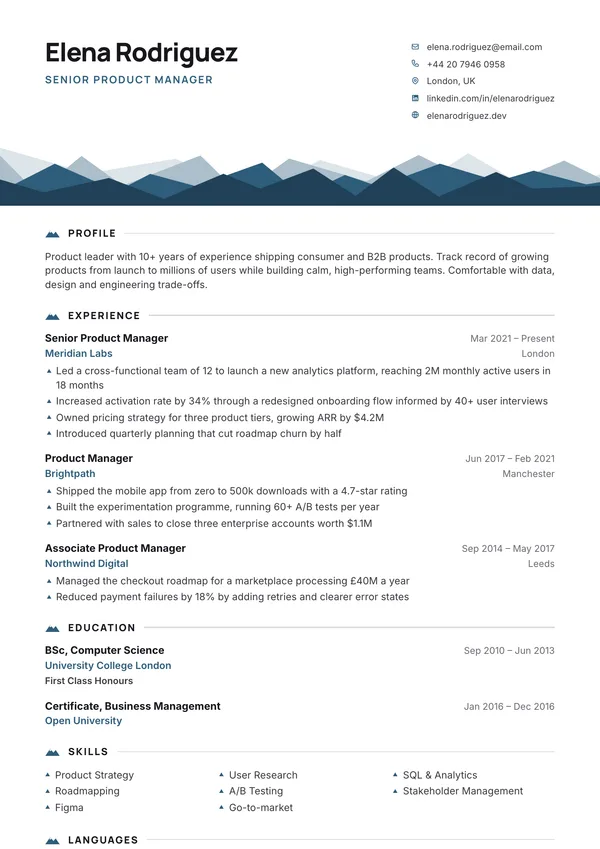
single-column template such as Linden or Summit is the safe choice. When you email a CV
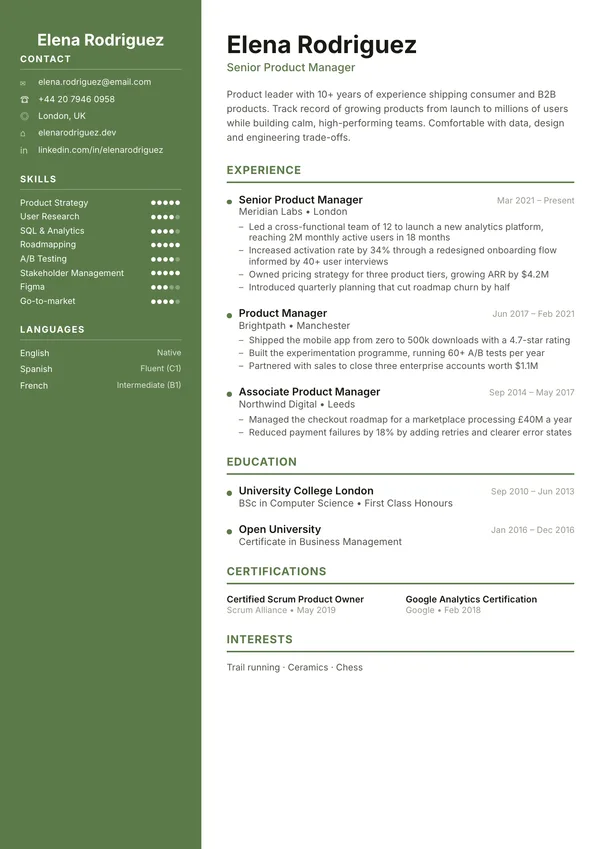
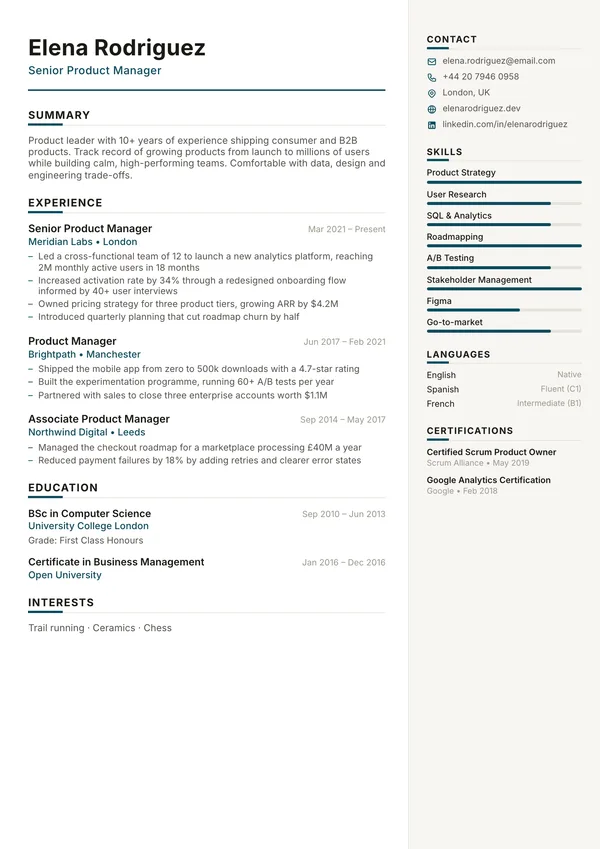
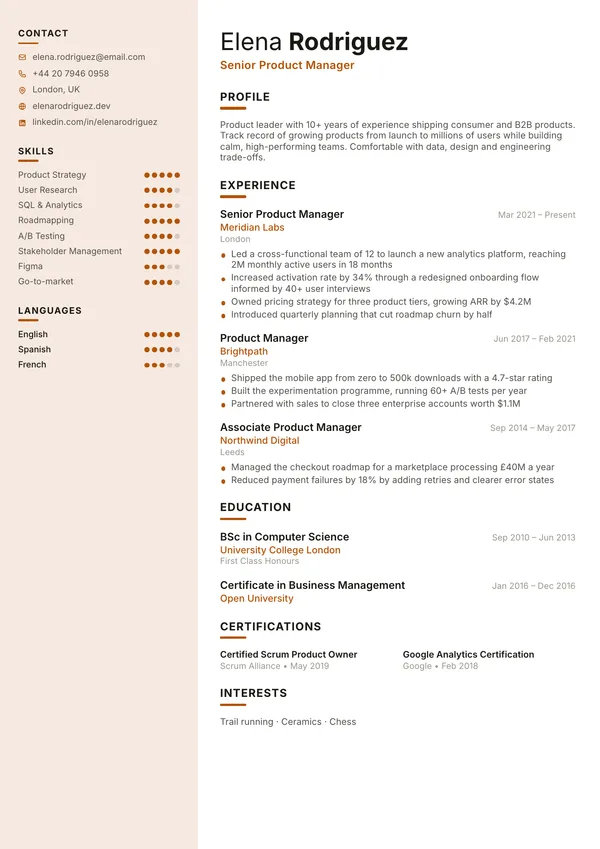
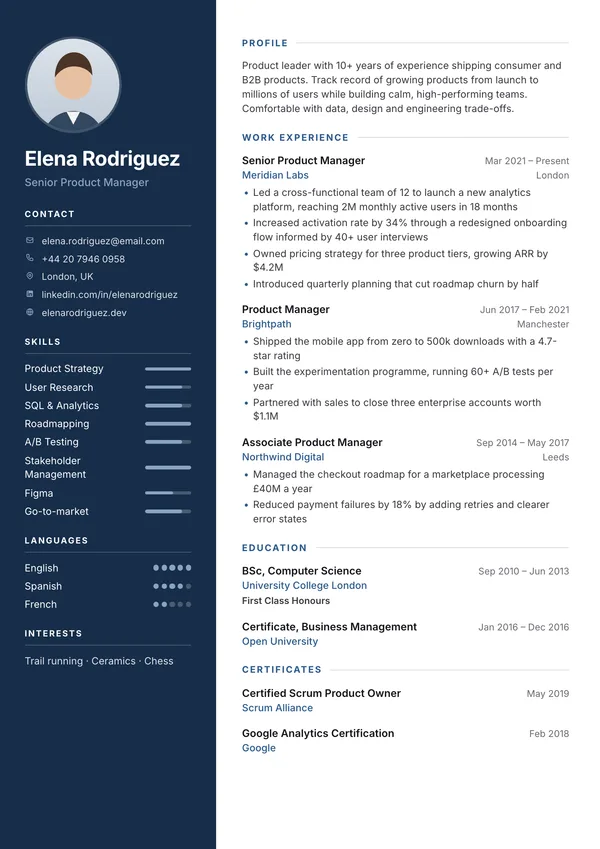
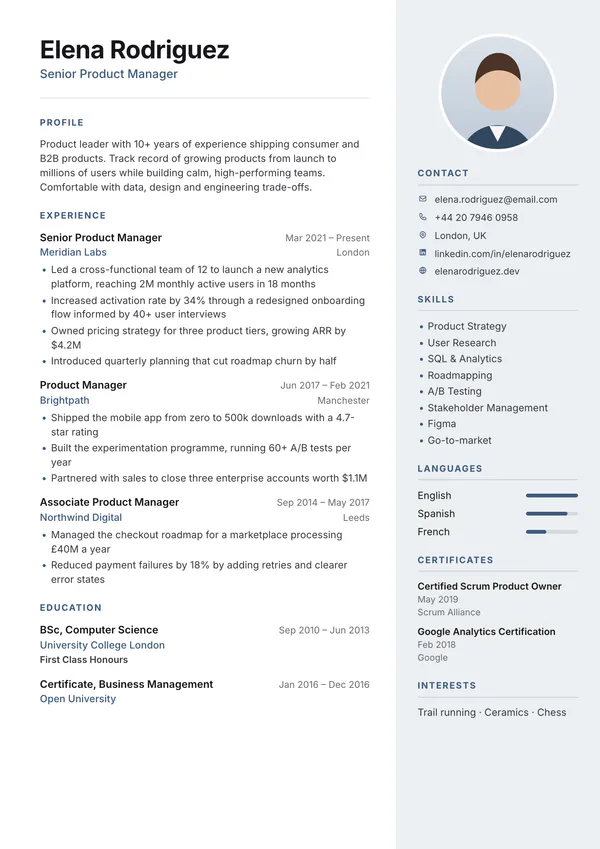
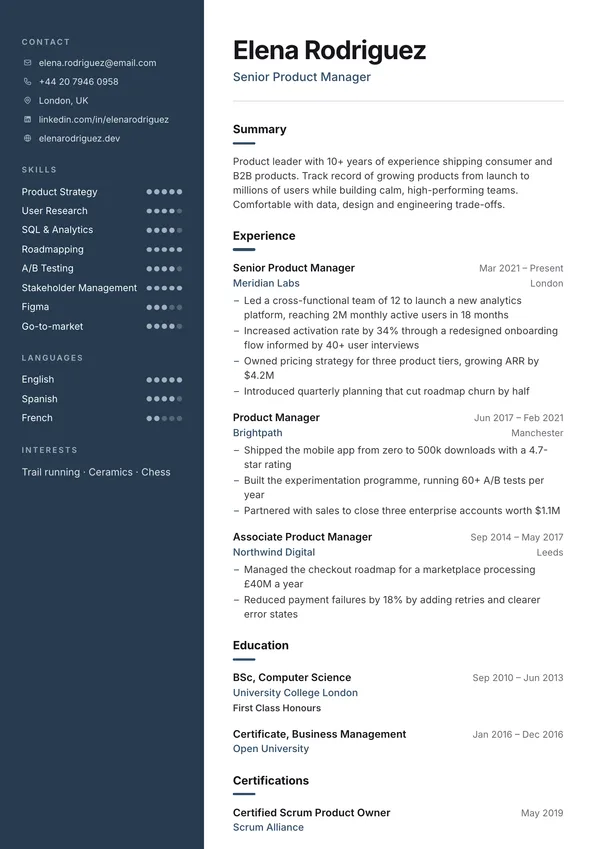
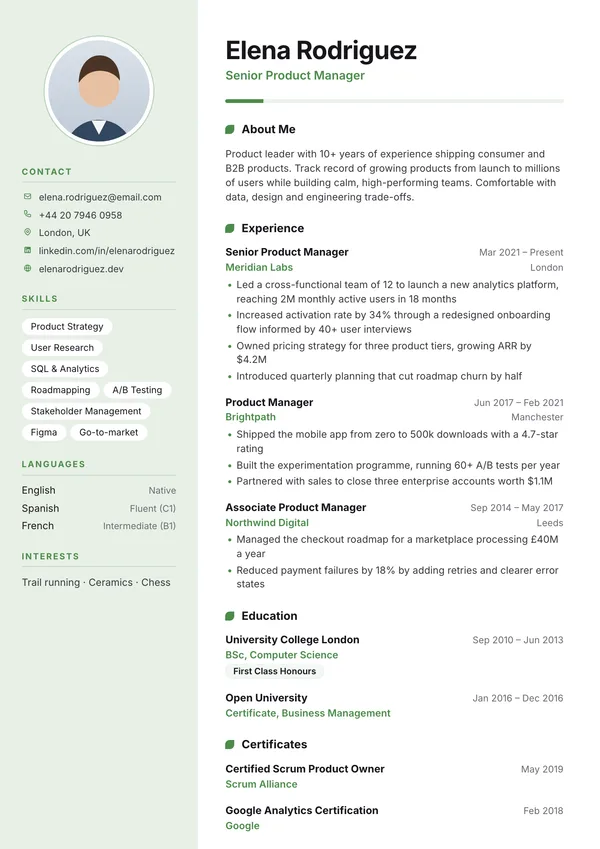
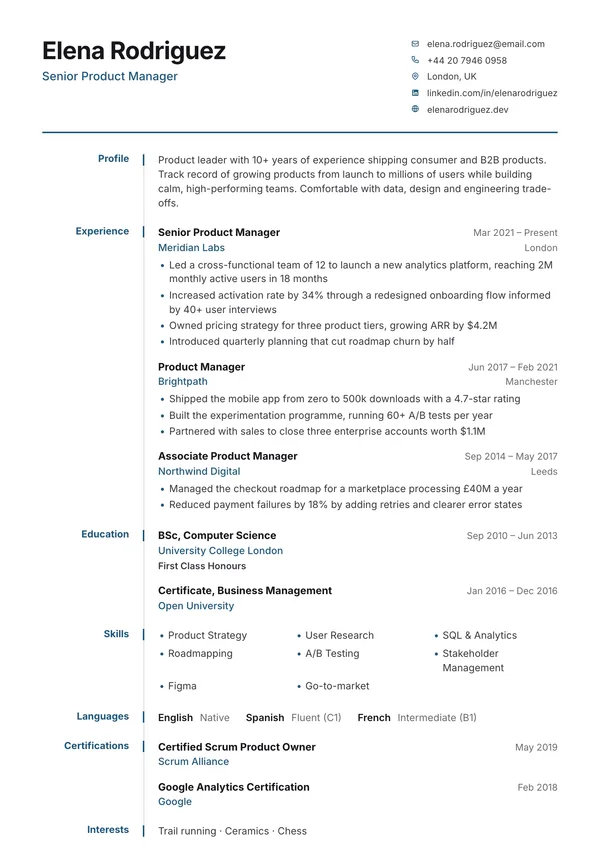
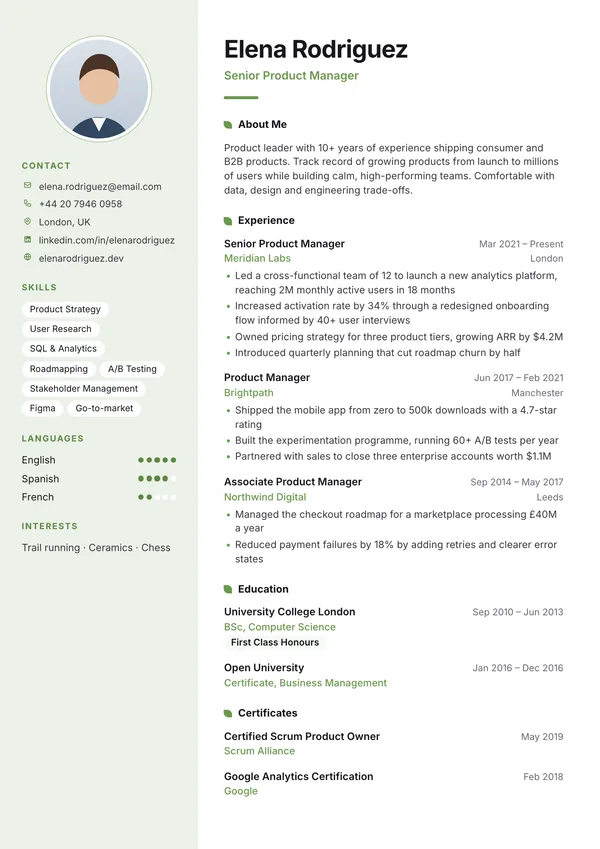
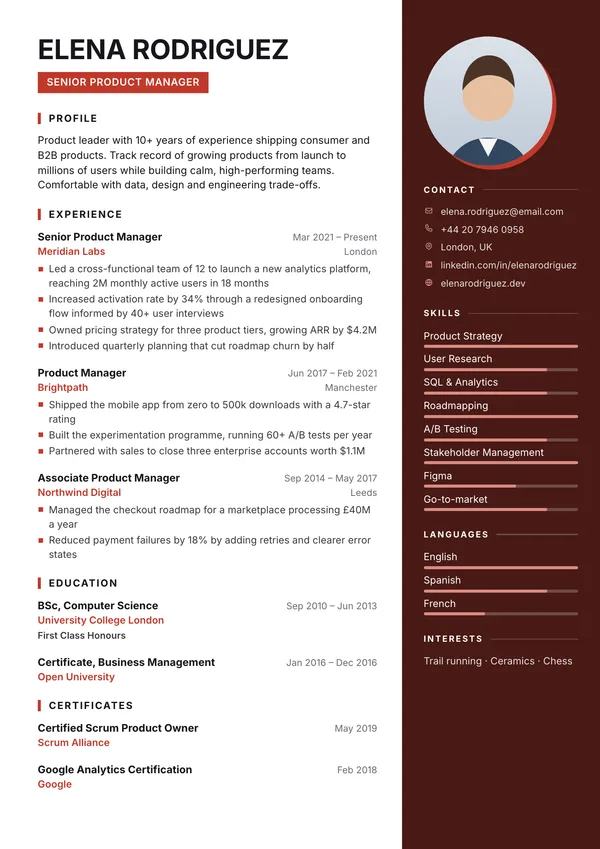
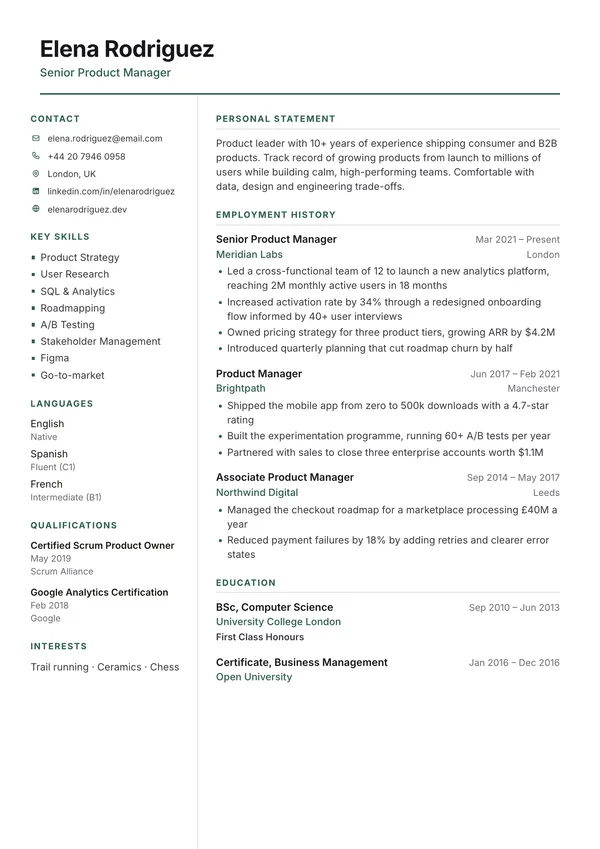
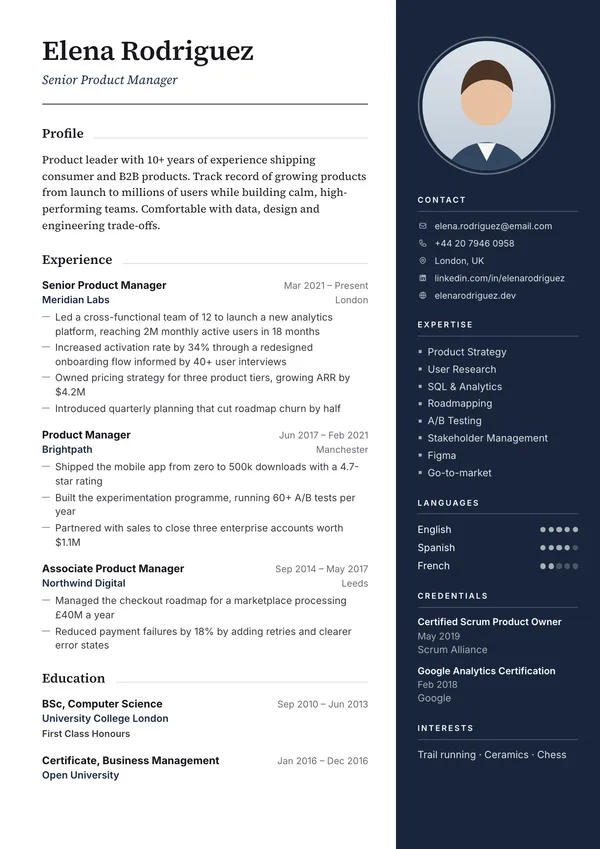
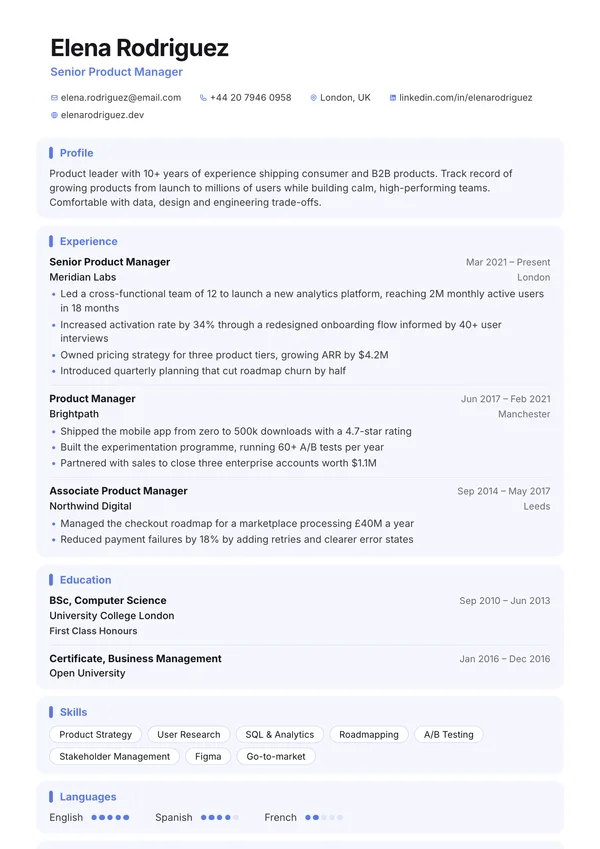
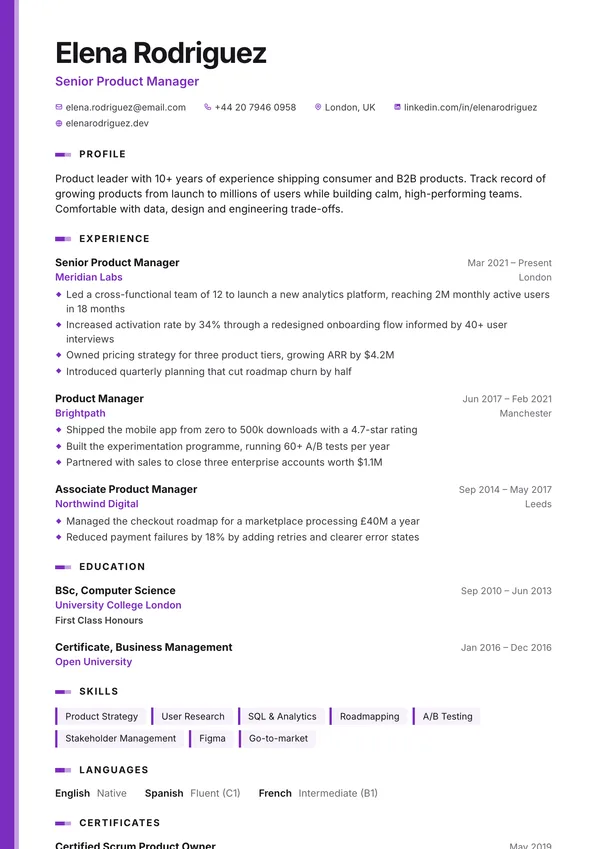
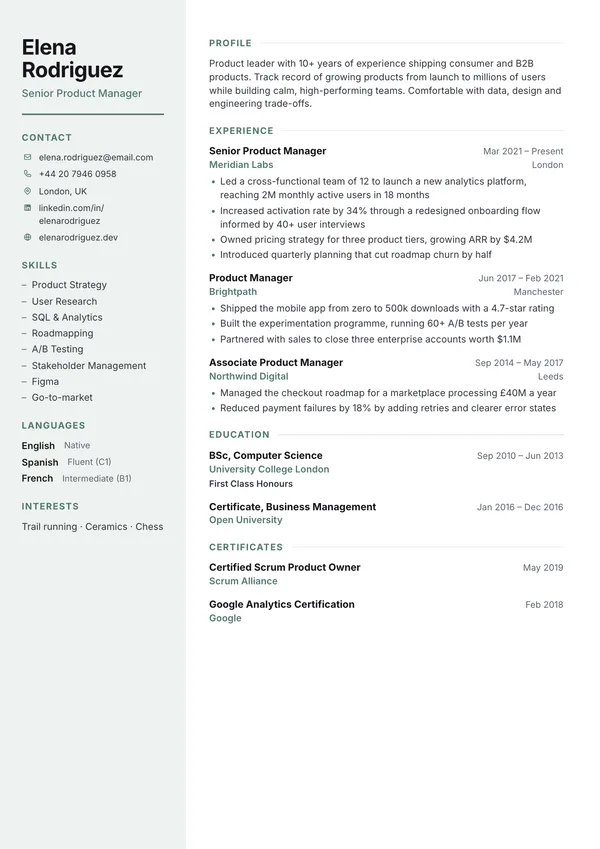
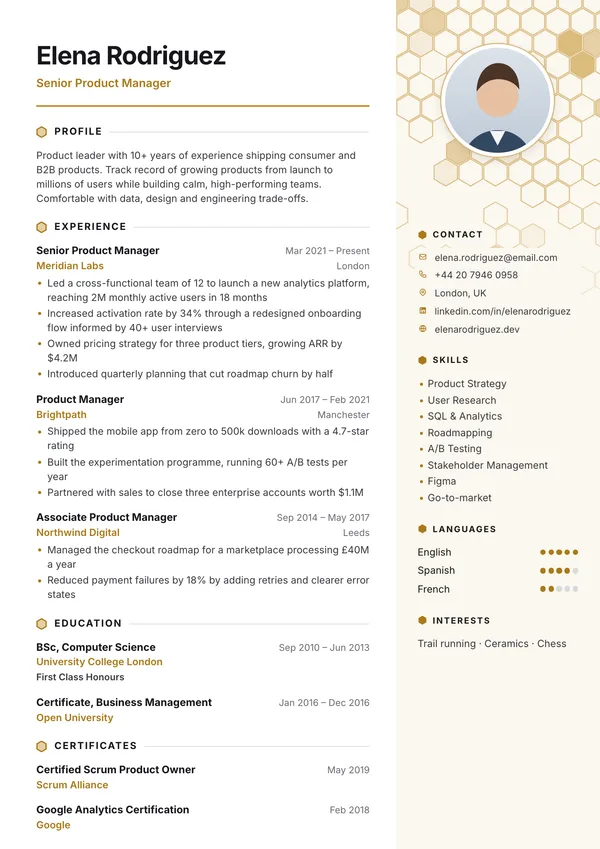
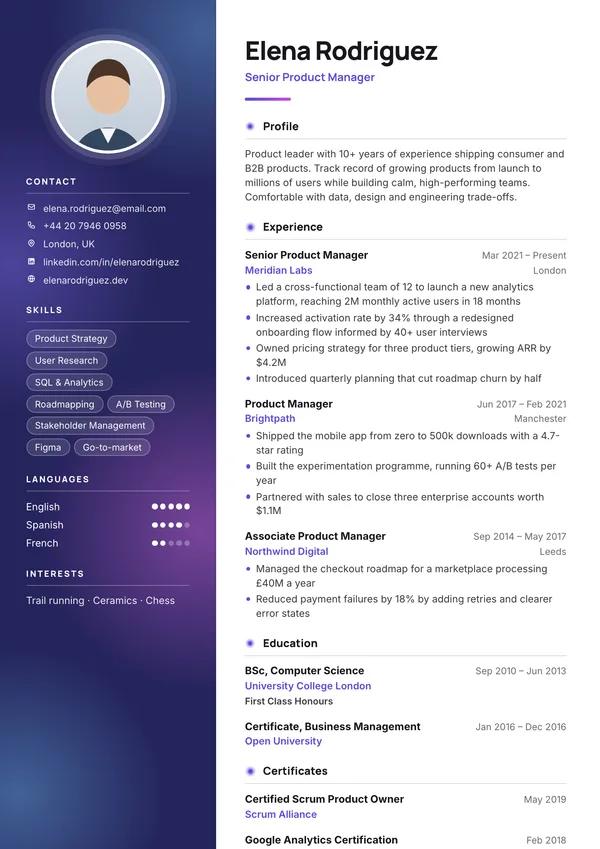
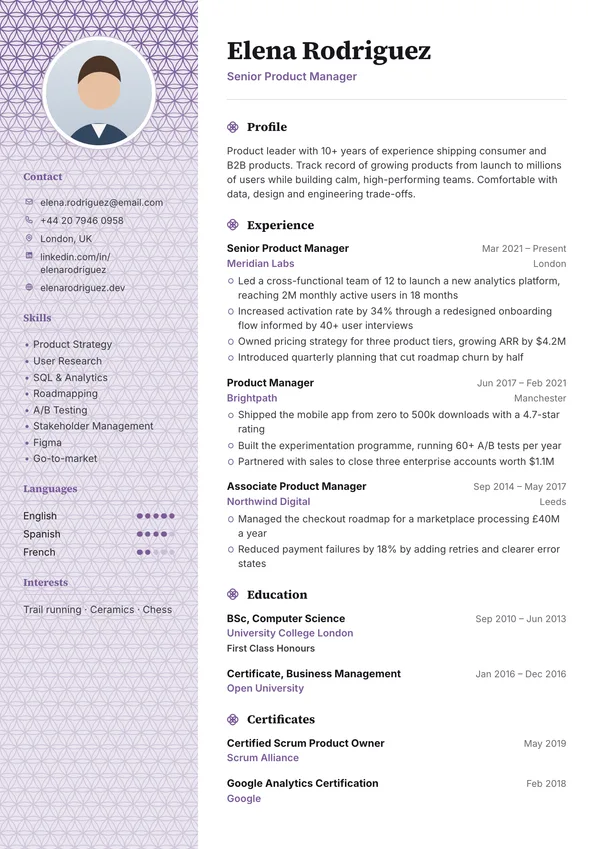
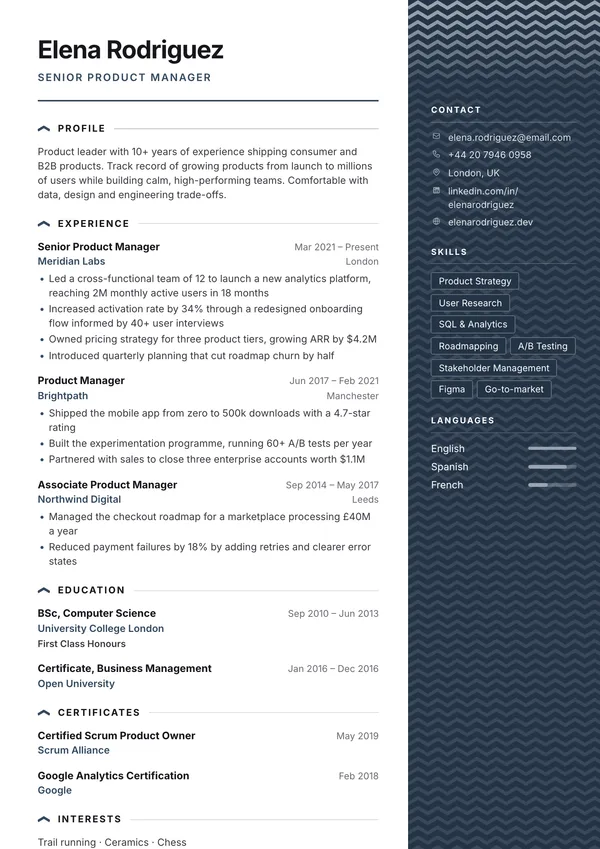
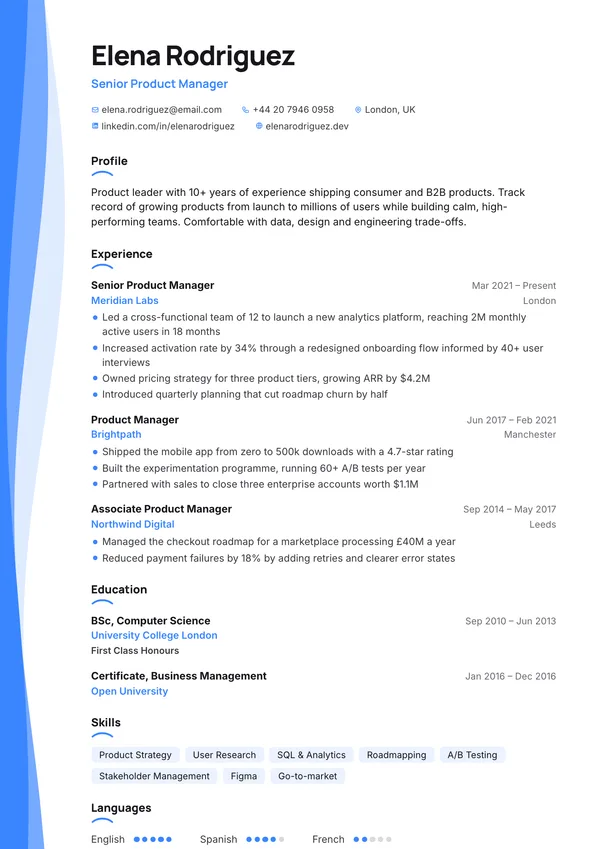
to a small company or hand it over at a careers fair, a two-column design with a sidebar is fine.
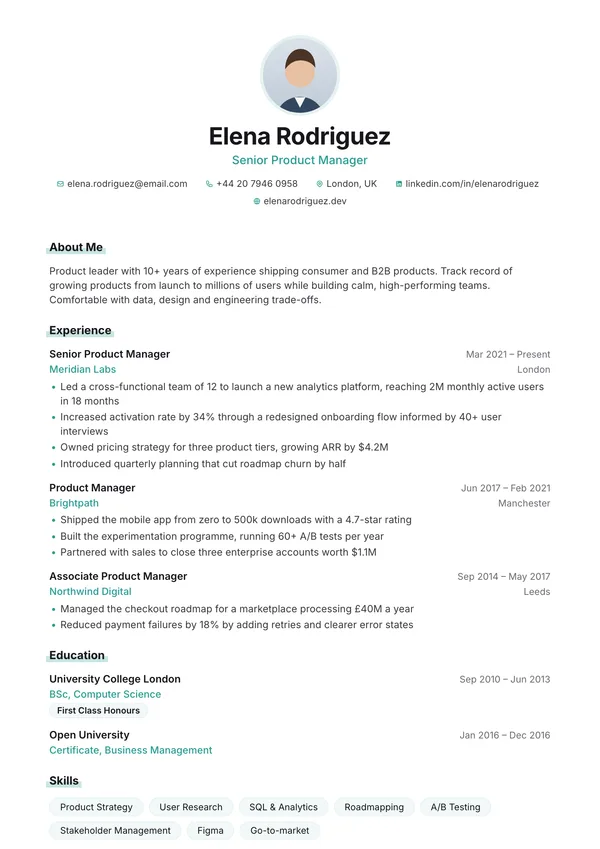
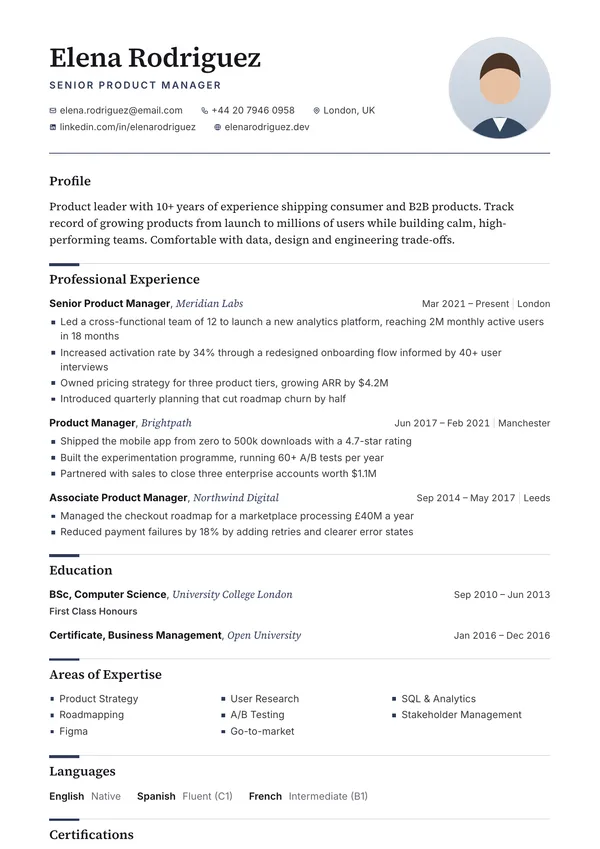
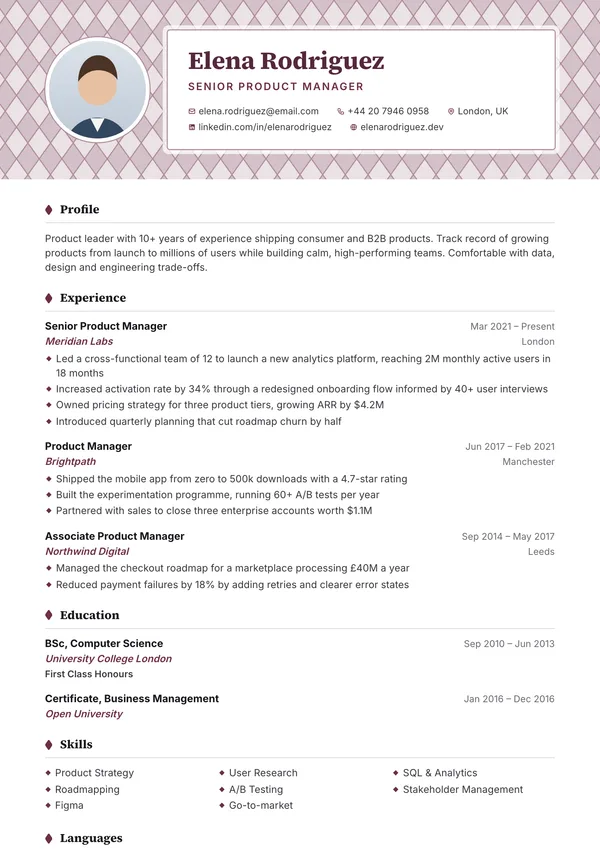
2. Is a photo expected where you are applying?
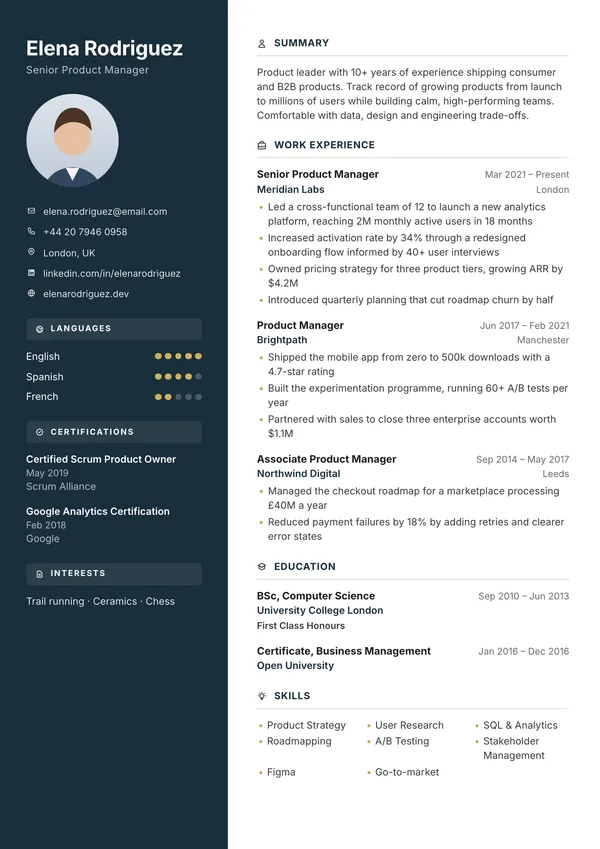
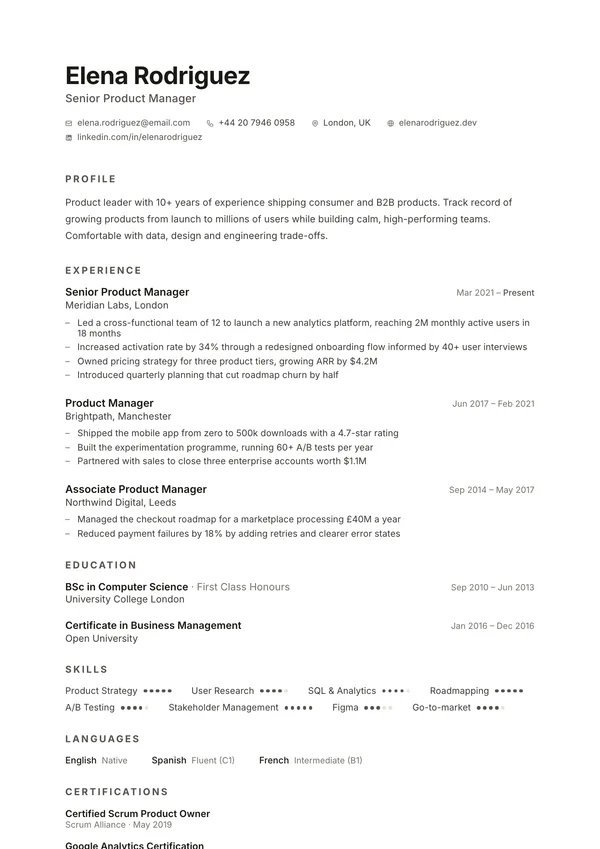
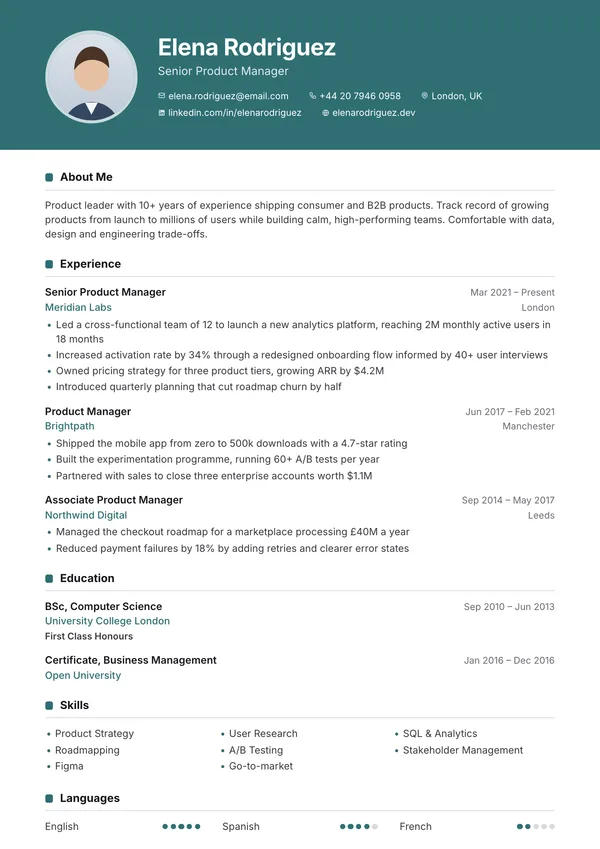
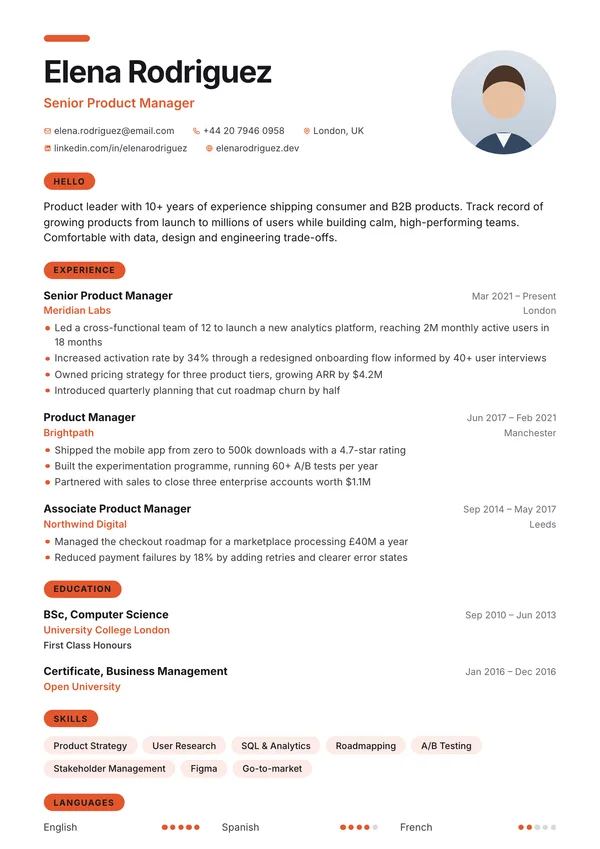
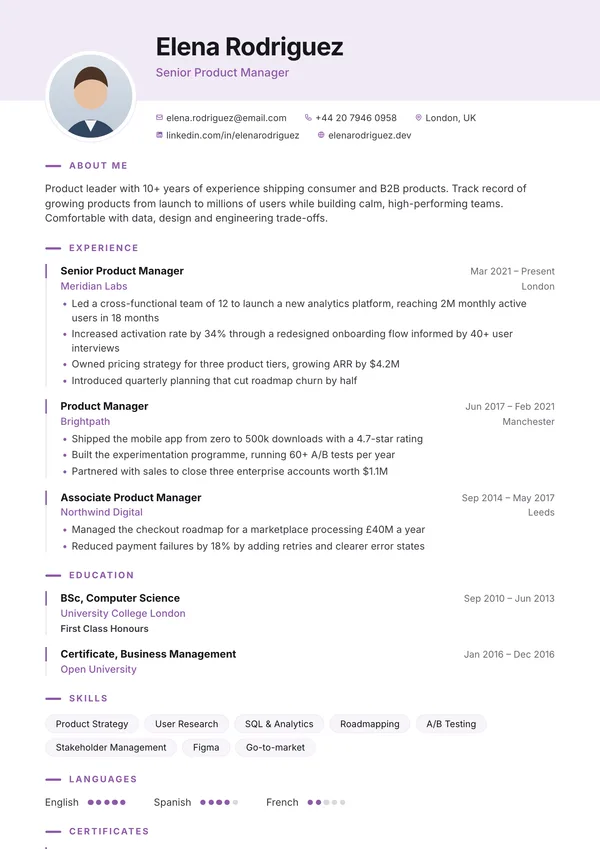
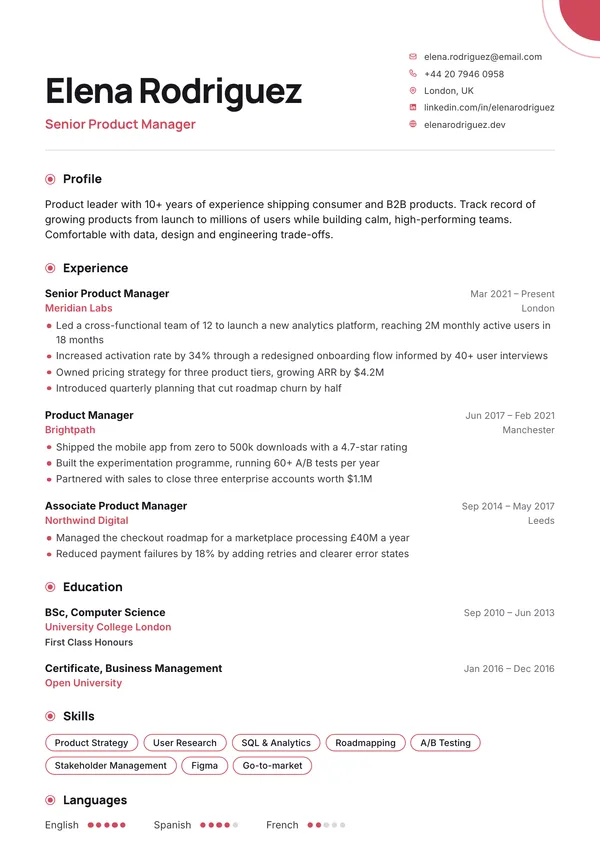
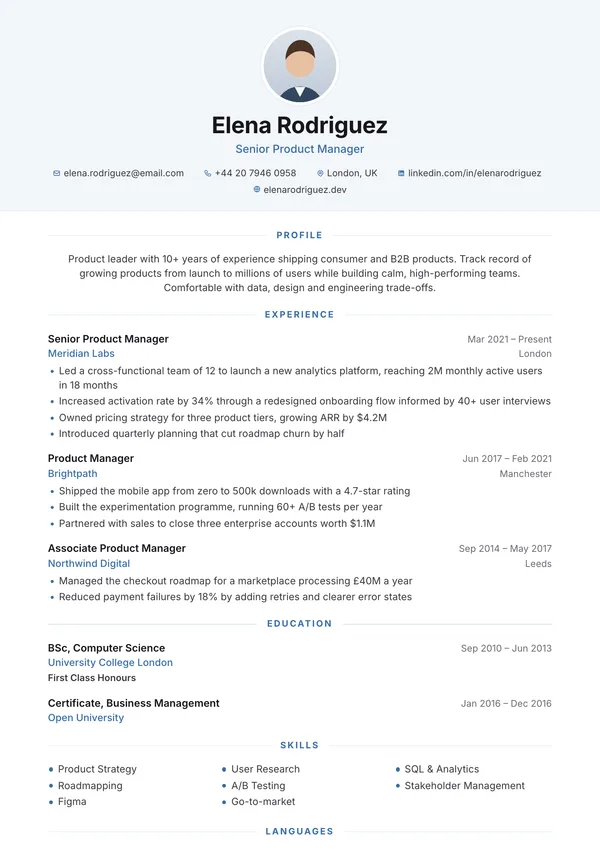
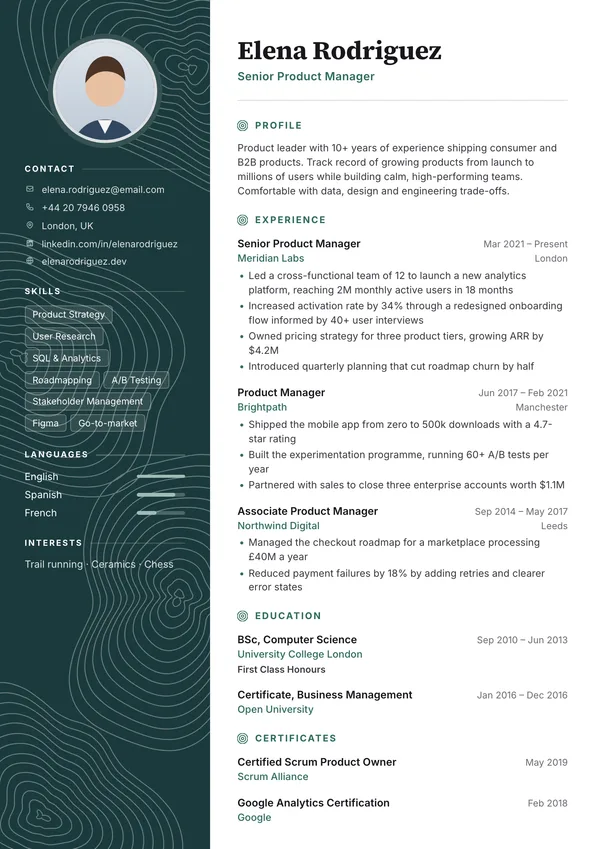
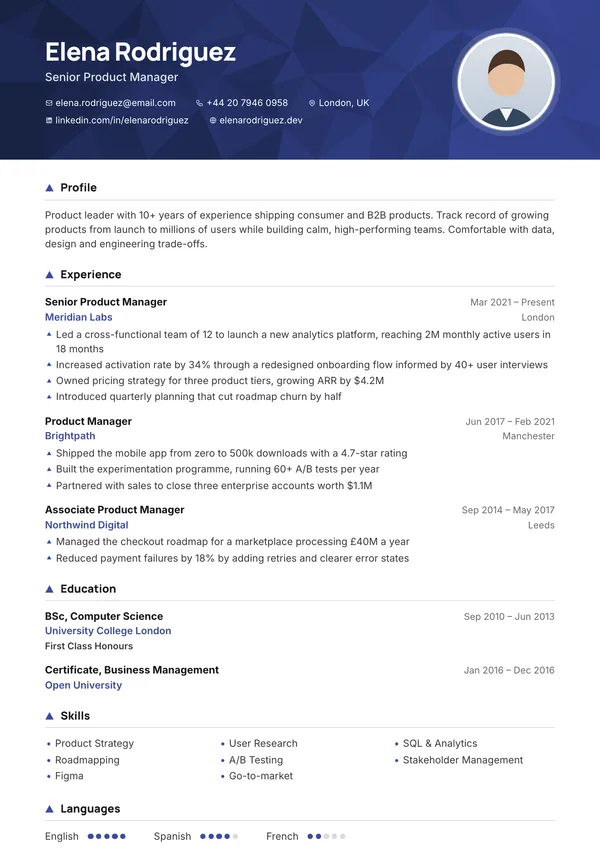
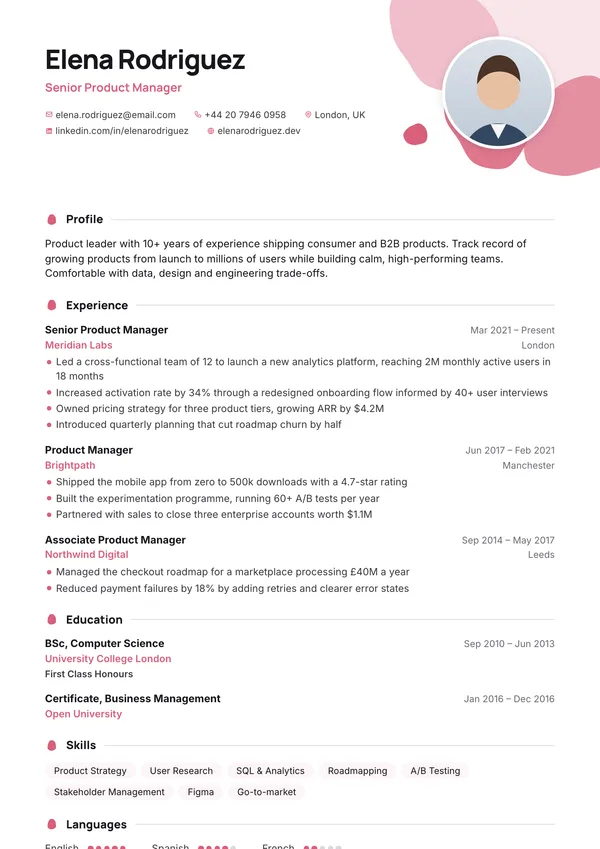
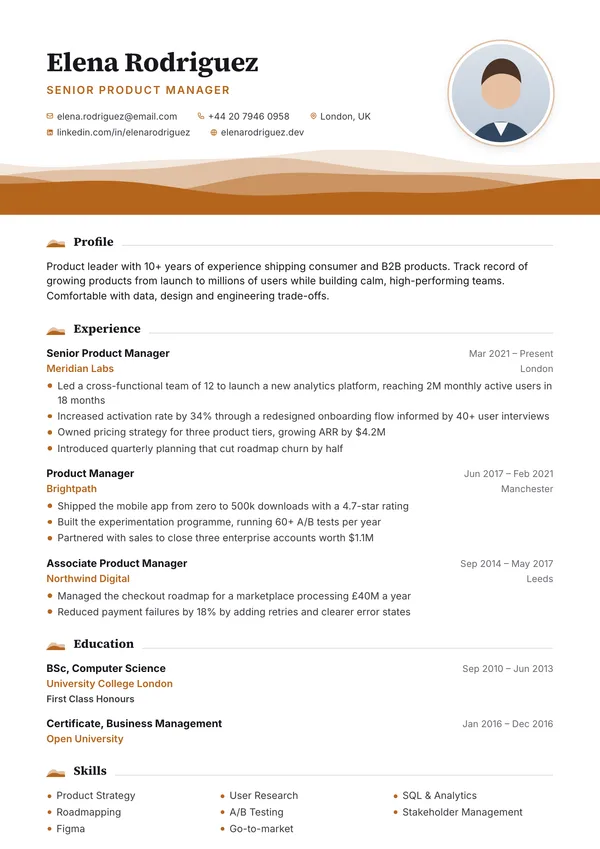
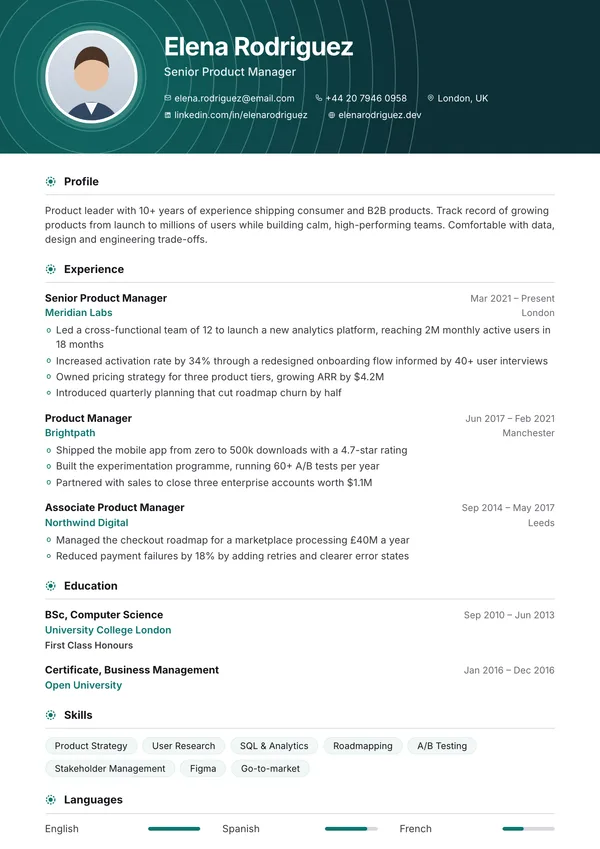
If it is, pick a template designed around one so the photo looks deliberate, like Sable or Lumen. If it is not, a template without a
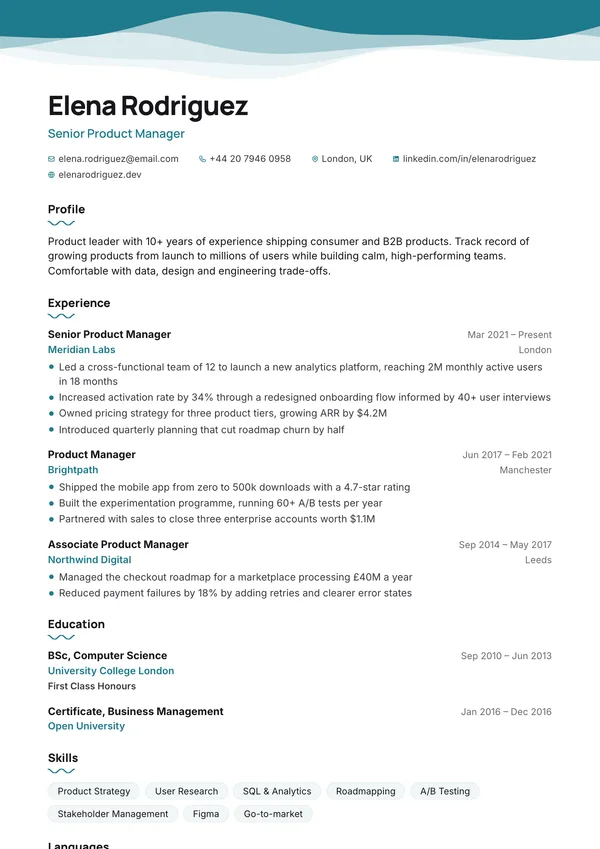
photo slot avoids an empty-looking corner.
3. How much do you have to say?
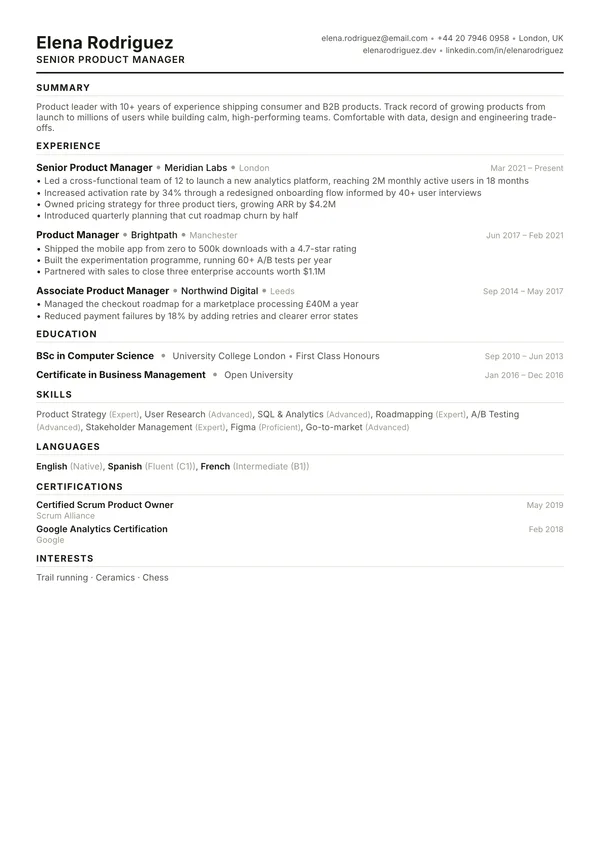
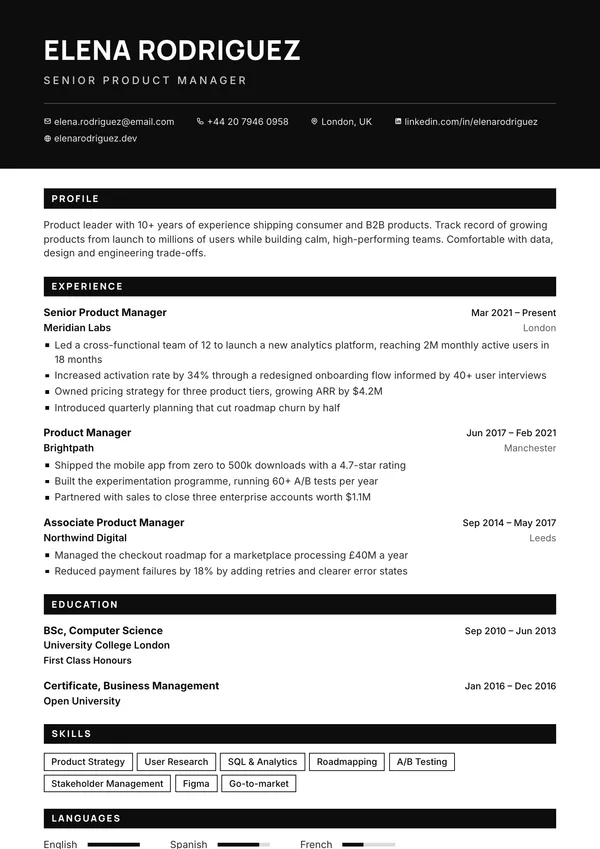
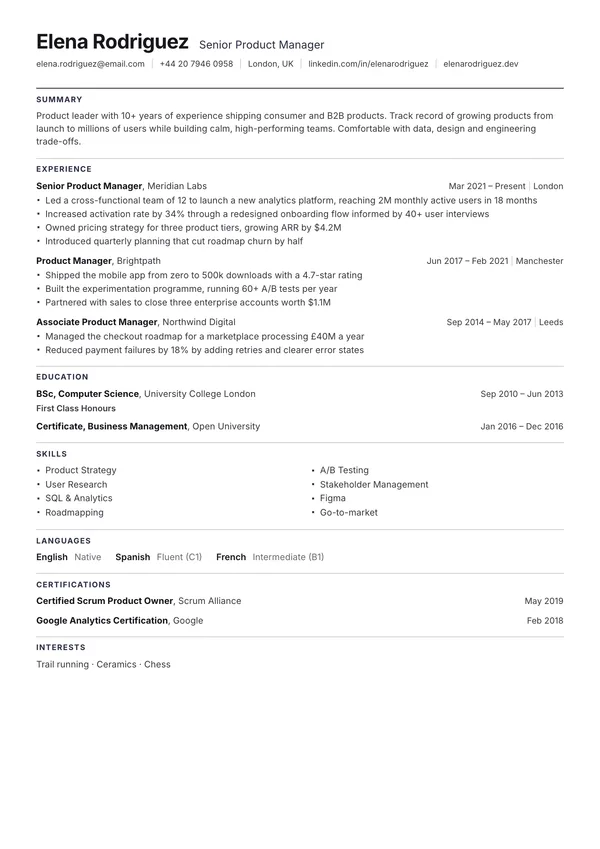
A graduate CV with one placement looks thin in a dense layout, so use a first-job template such as Pebble or Campus. Fifteen years of experience
looks cramped in a roomy one, so use a compact template such as Tally or Quarry.
Academic CVs
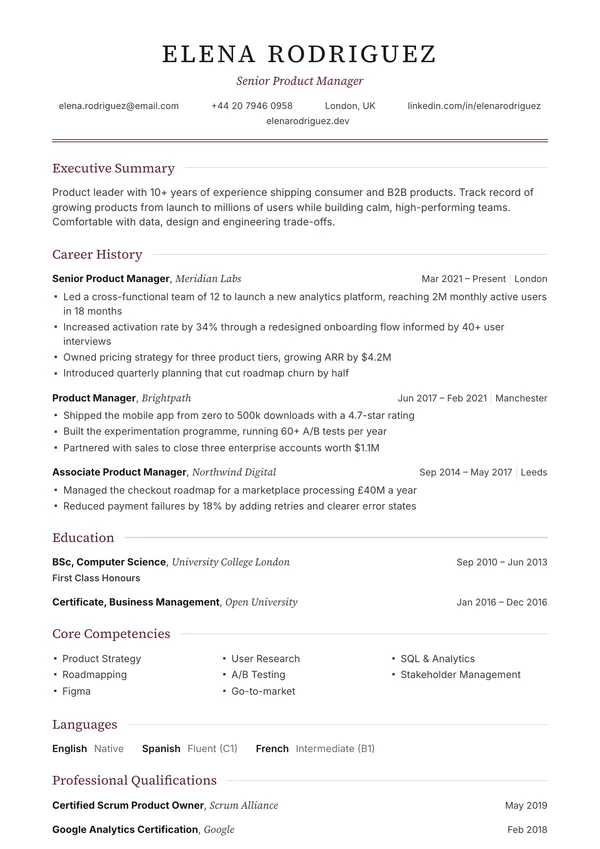
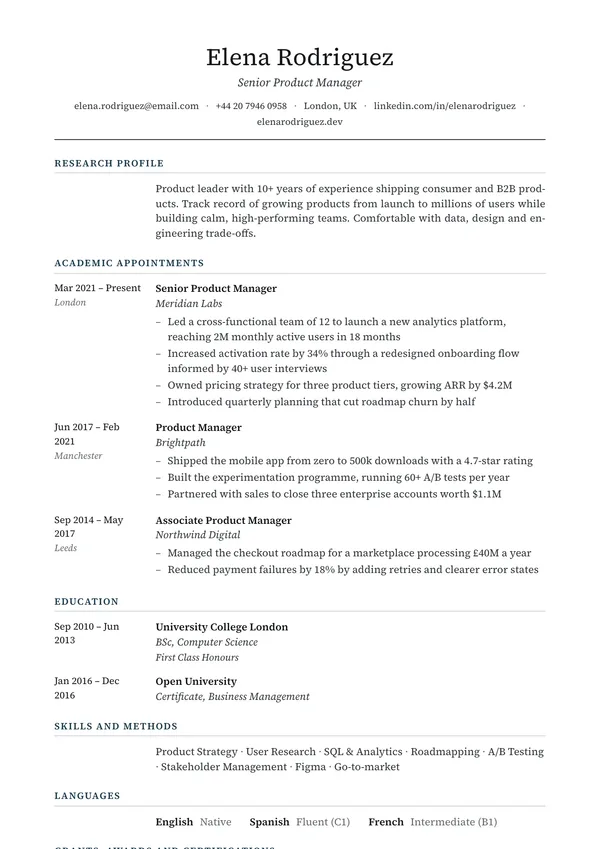
A full curriculum vitae for a PhD, research post or lectureship lists publications, grants, conferences and
teaching, and can run to many pages. Vellum and Quill use serif type and quiet headings that
stay readable over several pages. Add a Publications section in the builder and it is styled to match.